

Practice Point #51 - Alignment
How does one know one is aligned in the asana?
I received a question from Ruby from India. Their question is...
How does one know one is aligned in the asana?
Before COVID when we could attend yoga classes the teacher would check your alignment and physically adjust you so you would get a clear understanding on alignment in the body. This is helpful for the home practitioner because you then have the memory of the adjustment and can try and repeat this in your practice.
Checking our alignment in our home practice can be do done in many ways.
You can use a mirror but I do not recommend this method. It can reduce confidence and it takes away from learning to look inwards.
As a beginner, we need to use our eyes to look at our physical body to see where it is in relation to the rest of the body. This is how we begin.
But as our practice evolves, as our confidence develops we can use the tool of looking inwards.
Sensing more deeply and feeling if the body is in alignment.
What is important is that we don’t get caught up in being in perfect alignment. Every asana is a journey and some postures will come more easily than others. Depending on your body shape and the length of your bones etc, the alignment is different for everyone.
If you can take a class online from time to time where a teacher can see you and give you feedback this is helpful too.
It is a combination of things that will support you to find alignment in your home practice.

If you would like to submit a question about home practice and receive the answer in these weekly Practice Points, you can below. Question-related to specific injuries will not be answered.
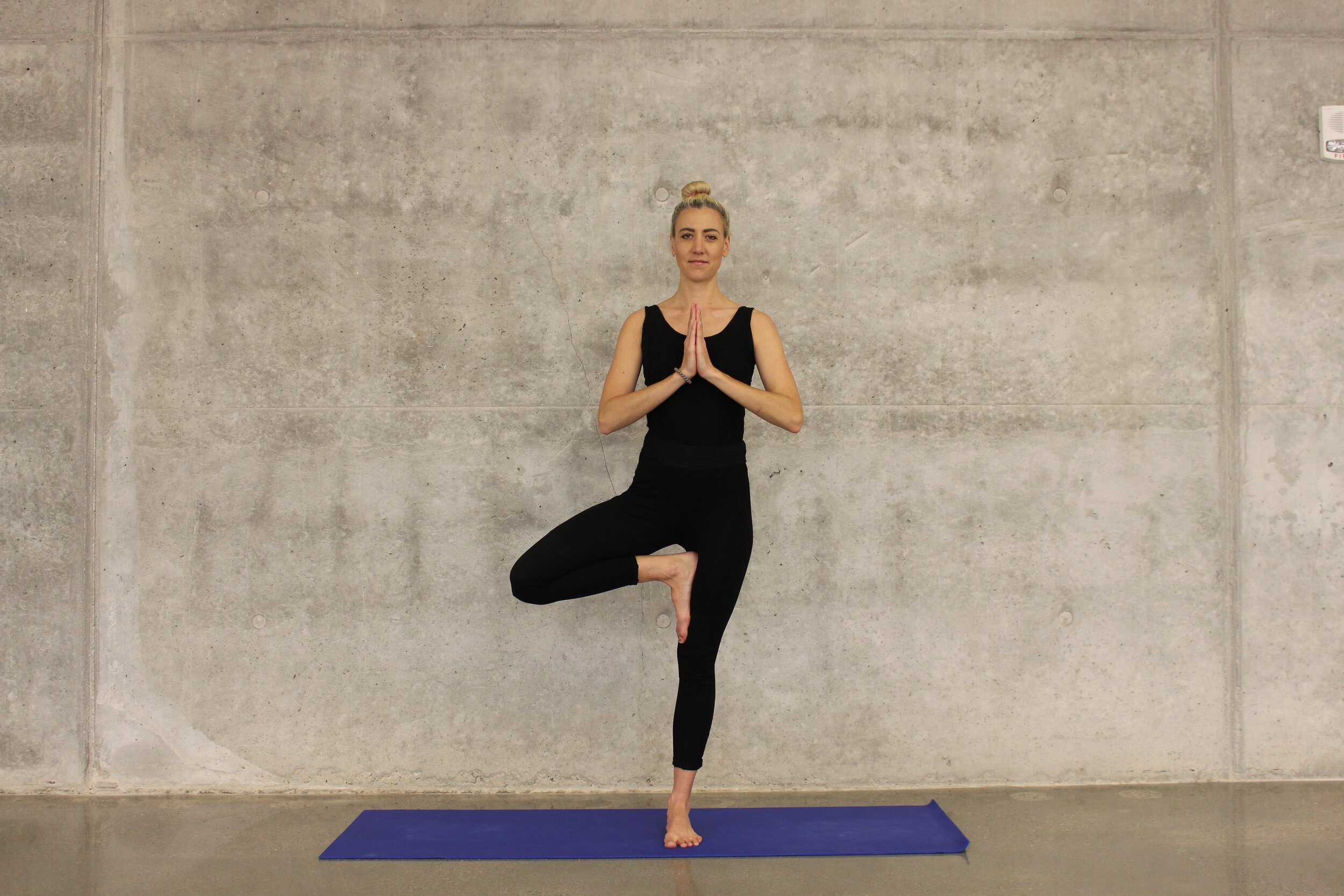
Practice Point #52 - Balancing Posture & Flexible Bodies
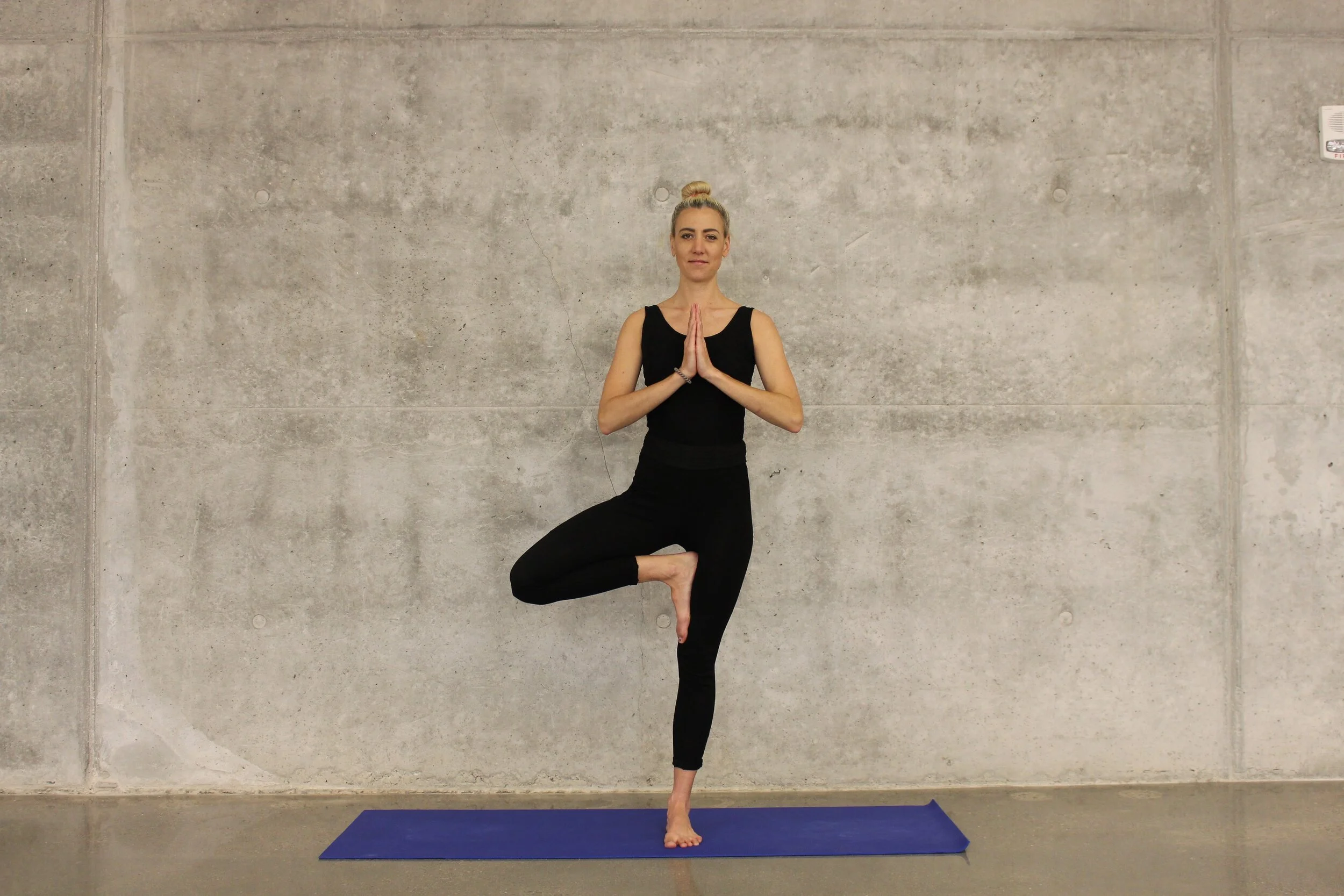
Why are balancing asana particularly difficult for flexible bodies?
I received a question from Filipa from Portugal. Their question is...
Why is balancing asana particularly difficult for flexible bodies?
From my observations teaching, from the experience in my own body, and from working closely with a team of teachers with very different body types I think I have a clue as to why this is.
What I observe is that people who are stiff, bound, and generally more muscular find balancing posture easier than people who are flexible and loose.
Balance requires the body to be contained and gathered, something that is very difficult for a loose flexible body to do.
If the joints are loose, they move around a lot, and stability is hard to achieve and essential to balance.
I hope this helps shine the light on this topic.
If you would like to submit a question about home practice and receive the answer in these weekly Practice Points, you can below. Question-related to specific injuries will not be answered.

Practice Point #53- Yoga & Knees
I recently tried surfing a few times and my problem is my knees. I have ‘cranky’ knees and they frequently tell me off in yoga also, there are many poses I have to adapt. Any wisdom to help my knees would be welcome. (I’m in my early 50s and most likely arthritis due to injury and strong family history.)
I received a question from Siobhan from Ireland. Their question is...
I recently tried surfing a few times and my problem is my knees. I have ‘cranky’ knees and they frequently tell me off in yoga also, there are many poses I have to adapt. Any wisdom to help my knees would be welcome. (I’m in my early 50s and most likely arthritis due to injury and strong family history.)
Knees are a worry. I worry about my knees too. Something about them seems so fragile.
I think it is important to keep them moving. By this I mean don’t hold them in one position for a long time. Arthritic joints need to move.
For arthritic knee students who attend classes with me, I also tell them to move in and out of the standing postures and not hold too long.
The knee joints love space. Use spacers wedged behind the knee for sitting postures.
Don’t forget the knee is connected to the thigh bone.
Are your legs strong?
Are you using the muscle of the legs to support your knees?
Sorry but sometimes one question leads to me asking many more.
Lastly, how are your hips, they are after all connected to the thigh bone.
When we have a problem area we tend to focus on that area as the problem.
I encourage you to shift the blame and look at what else might not be working to help you

If you would like to submit a question about home practice and receive the answer in these weekly Practice Points, you can below. Question-related to specific injuries will not be answered.

Practice Point #54- Stress Release
I have had more stress triggers than usual and only recently realized stress may be contributing to a long-term neck/shoulder issue. What are the best asanas to release stored stress?
I received a question from Belinda from Australia. Their question is...
I have had more stress triggers than usual and only recently realised stress may be contributing to a long term neck/shoulder issue. What are the best asanas to release stored stress?
Restorative. Restorative. Restorative.
For some people practicing restorative posture is very challenging. Me included.
I notice sometimes when I set myself up in a restorative posture, my mind is so busy and I quickly get agitated and want to come out of the posture.
This is stress revealing itself.
I encourage you to set a timer to start only once the mind a stilled, then hold the restorative posture (make sure you are comfortable and can relax) for the entire duration of the time set.
It takes time for the mind to wind down, when it reaches a state of relaxation and quiet then the rest of the body can begin to relax.
We are not restoring the body if we are in a posture for 20 minutes and the mind is active and elsewhere.
When you do a restorative pose, watch the quality of your mind. Wait for it to become quiet then the posture begins.

If you would like to submit a question about home practice and receive the answer in these weekly Practice Points, you can below. Question-related to specific injuries will not be answered.
Practice Point # 55 - Handstand
What is the right sequence to do a handstand?
I received a question from Mandeep from India. Their question is...
What is the right sequence to do a handstand?
There is no one way to do anything right?
I am guessing from your question you want to learn how to do a handstand?
I created a video pack to learn handstands. You can check it out HERE
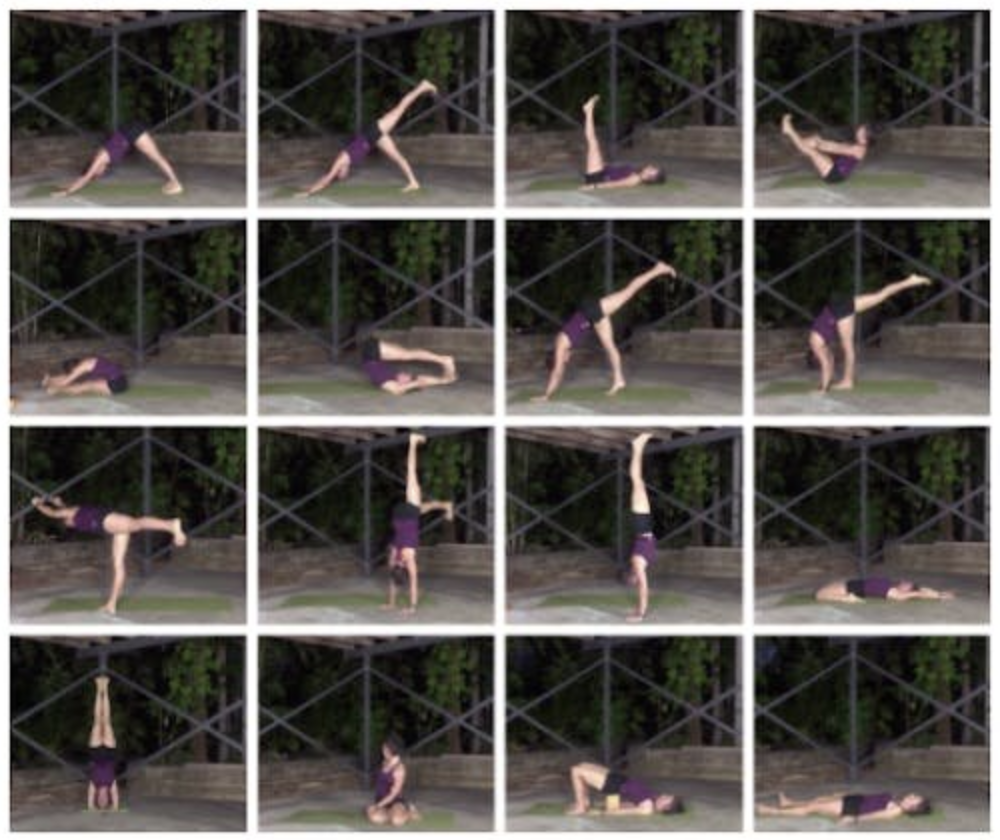
Here is a sequence that aims to work all of the parts of the body required for a handstand.
It is not just upper arm strength.
It also involves the abdominals, hips, and legs all of which are covered in the video series above.
For now, I hope this sequence gives you some clues.

If you would like to submit a question about home practice and receive the answer in these weekly Practice Points, you can below. Question-related to specific injuries will not be answered.

Practice Point #56 - Hyper- extension
I have hyper-extending elbows and knees which means it's very hard for me to get enough grip and presence on my upper arms and thighs to work and stretch them. I wondered if you had any useful tips on how to work those two areas? I find it particularly difficult to lift my thighs properly in standing poses.
I received a question from Anna from France. Their question is...
I have hyper-extending elbows and knees which means it's very hard for me to get enough grip and presence on my upper arms and thighs to work and stretch them. I wondered if you had any useful tips on how to work those two areas? I find it particularly difficult to lift my thighs properly in standing poses.
You are not alone, this very common for students, particularly women.
First I would like to talk about your use of the word ‘stretch’.
With hyper-extension, you need to focus less on stretching and more on containing.
Imagining the muscles gripping and being contained can be helpful, rather than thinking about stretching.
A really easy way to bring more mindfulness to this gripping action is to actually grip something.
For example, in tadasana, you can grip a block between and just above the knees to help grip the vastus medialis oblique muscle which if engaged will stop you from pushing the knee back and hyper-extending.
In standing postures, we sometimes put a brick behind the calf just below the knee, to dam the knee and stop it from pushing back.
This can be a little tricky to get in place but again helps to learn to switch on the VMO muscle in your standing postures.
In downward-facing dog, you can squeeze a block between the elbows, helping to contain the joints and get that squeezing and gripping action of the muscles.


I hope this gives you some clues to move forward.
If you would like to submit a question about home practice and receive the answer in these weekly Practice Points, you can below. Question-related to specific injuries will not be answered.
Practice Point #57 - Attitude to Injuries
I have been dealing with a pesky shoulder issue...it feels like it's taking forever. All through the recovery period I was anxious about all the asanas that I wasn't able to practice and lamenting all those that I'd started to improve on, and had to stop practicing due to said injury. It's affected my practice and teaching! My question is how do we not lose our marbles when an injury seemingly sets us back and is an obstacle to practice.
I received a question from Pragya from the India. Their question is...
I have been dealing with a pesky shoulder issue...it feels like it's taking forever. All through the recovery period I was anxious about all the asanas that I wasn't able to practice and lamenting all those that I'd started to improve on, and had to stop practicing due to said injury. It's affected my practice and teaching! My question is how do we not lose our marbles when an injury seemingly sets us back and is an obstacle to practice.
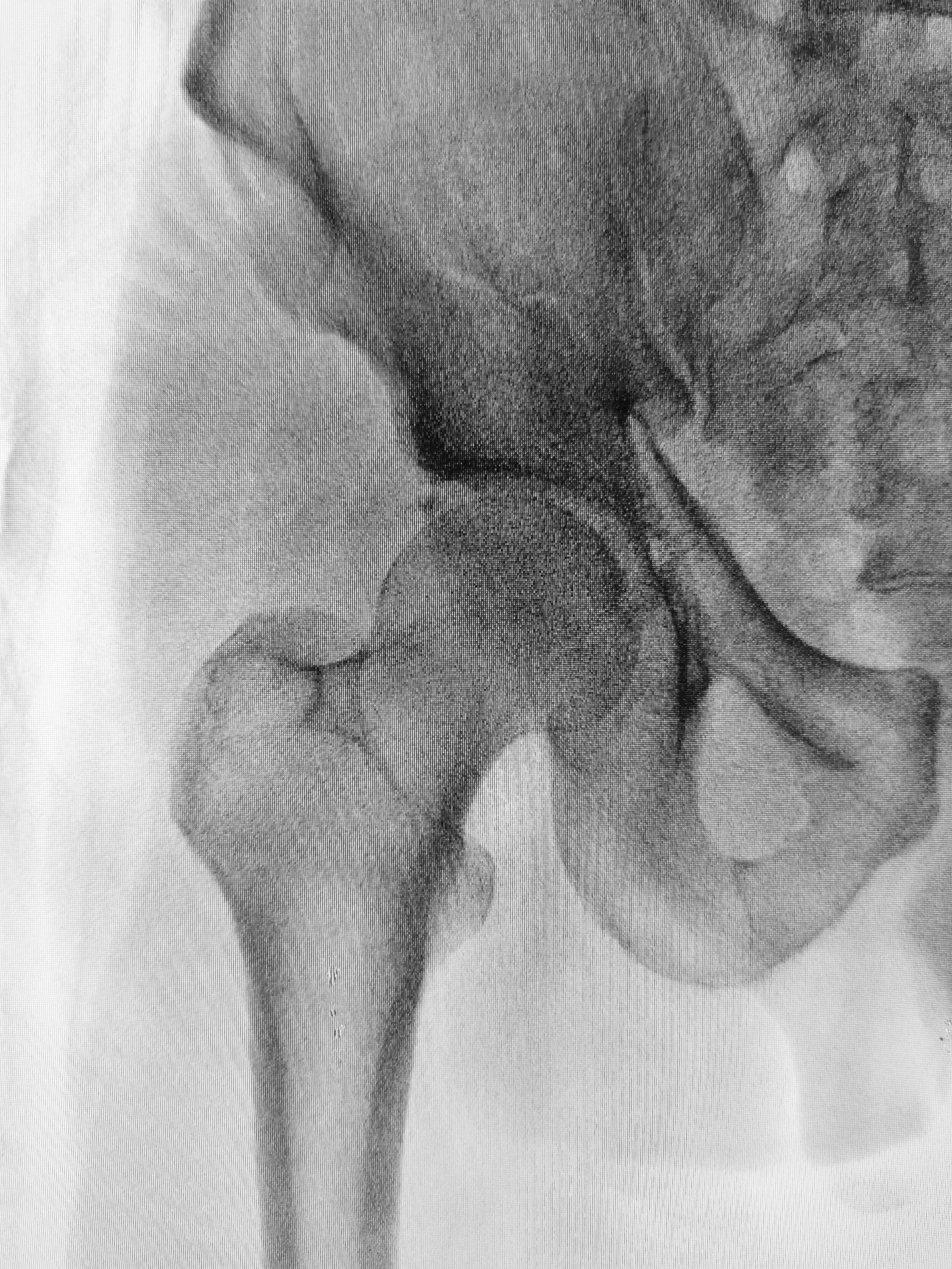
I love this question because I have had this experience myself and through that experience realized how limiting the mind is and how we can shift our thinking to shift our healing.
When I had my first injuries I thought what a hassle, how annoying, now I will not be able to progress my yoga.
I will give it to you straight.
Change your attitude now. Stop seeing the injury as a setback or obstacle.
See every injury, ailment, condition as a learning opportunity.
If our minds are with negative thoughts like I can’t do this and I can’t do that then we are closing ourselves off from seeing what we can do and what we can learn from the situation.
It is literally just a switch in the brain you have to flick.
What is your body telling you?
When the shoulder has pain this is a direct and clear message that the body is trying to tell you, but you can’t hear it, because you are disappointed that you can’t do Chatarunga or whatever pose.
What can you do?
So much!
So many postures you can do that will make you feel good, that will heal your body and get the connection between the body and the mind.
The body-mind connection is not there if we can’t listen to what the body is trying to tell us.
Why do we do yoga?
To connect the body with the mind and soul.
Start being curious about what you can do to respond to the message from your body about your shoulder.
Be patient because many beautiful things will be revealed if your eyes are open to see them and you will see your yoga progress so much deeper with this knowledge.
Good luck.
If you would like to submit a question about home practice and receive the answer in these weekly Practice Points, you can below. Question-related to specific injuries will not be answered.

Practice Point # 58 - Balancing Hormones
Can you suggest a sequence for endometriosis?
I received a question from Victoria from Italy. Their question is...
Can you suggest a sequence for endometriosis?
I would recommend a practice to balance the hormones. Here is a sequence to follow, which is not dissimilar from a menstruation sequence.
Supta Baddha Konasana
Supta Parsva Padangustasana
Utthita Parsva Hasta Padangustasana
Ardha Chandrasana
Supported Uttanasana with feet wide (in ropes if possible)
Supported Adho Mukha Svanasana with feet wide (in ropes if possible)
Dwi pada Viparita Dandasana with the legs wider than hip width
Setu Bhanda with the legs wider than hip-width
Savasana
No matter the pose take your feet wide, rather than joining the legs. When the legs are together we reduce the space in the abdomen.
As for inversions, they might help because you are reversing gravity and shifting the weight of the organs. Keep your feet hip-width apart.
I hope this helps.
If you would like to submit a question about home practice and receive the answer in these weekly Practice Points, you can below. Question related to specific injuries will not be answered.
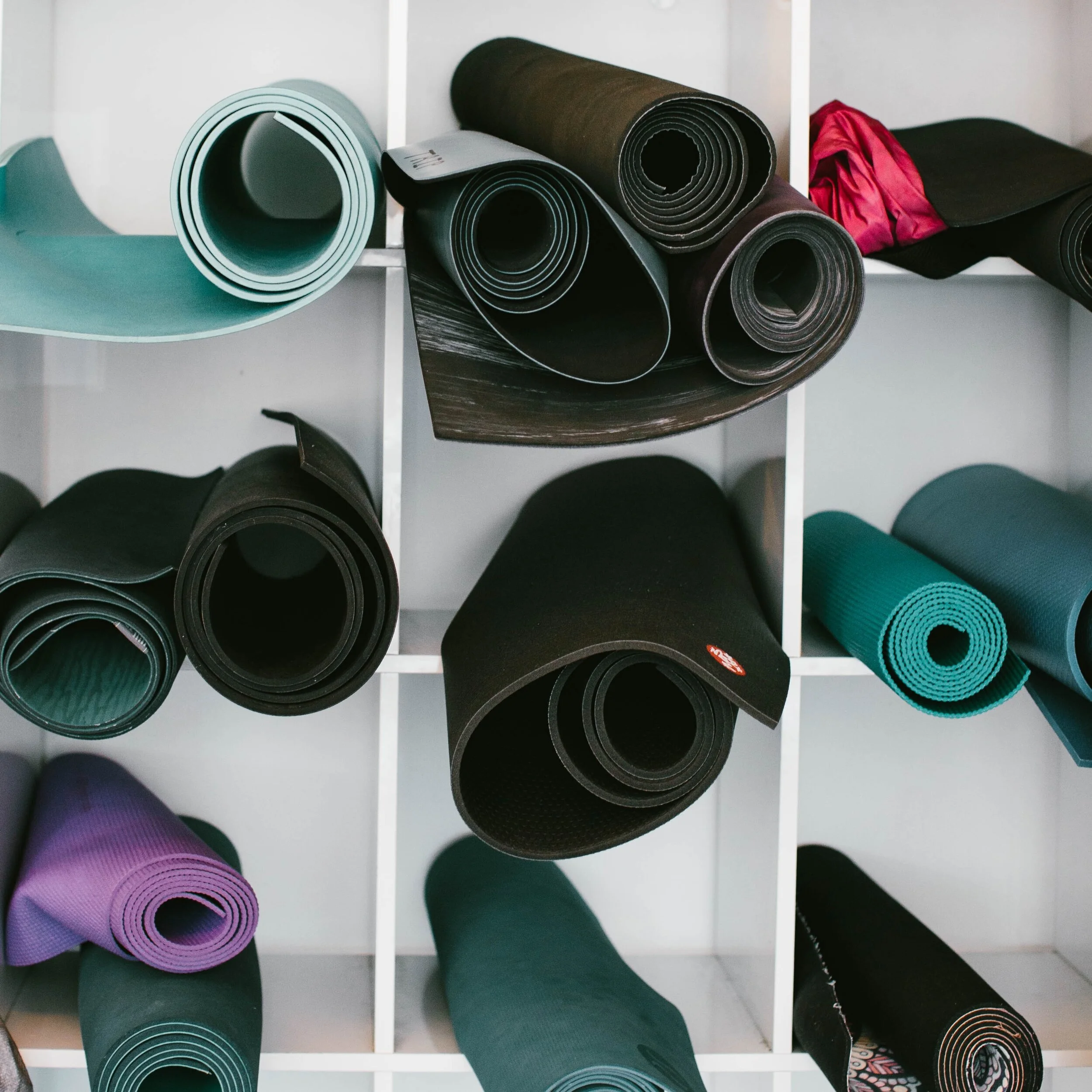
Practice Point # 59 - Sticky or Slippery Mats
What should one do when you find yourself slipping while doing Adho muka svanasana even with a good mat grip?
I received a question from Rajeswari from the India. Their question is...
What should one do when you find yourself slipping while doing Adho muka svanasana even with good mat grip?
You can try to grip the outer edges of the mat and pull them away as you stretch back.
This will give you something to grip and not slip.
This will also give an outer rotation of the upper arms and more opening in the shoulders.
Some students put a towel under their hands to reduce slipping.
If your mat is new or perhaps it is old, but washing it in the washing machine with a small amount of washing soap can help to reduce the slipperiness of the mat.
If you would like to submit a question about home practice and receive the answer in these weekly Practice Points, you can below. Question-related to specific injuries will not be answered.
Practice Point #60 - Shoulder Tension Relief
Lots of tension in the neck and shoulder build-up although I try to keep my shoulder down. How to do it on the downward dog or headstand?
I received a question from Nathalie from the France. Their question is...
Lots of tension in the neck and shoulder builds up although I try to keep shoulder down . How to do it on downward dog or head stand ?
This is a great question, especially since you ask how to keep the shoulders down when you are in an inverted posture where gravity is at work.
I am not going to give you instructions in this email on how to do this in the postures.
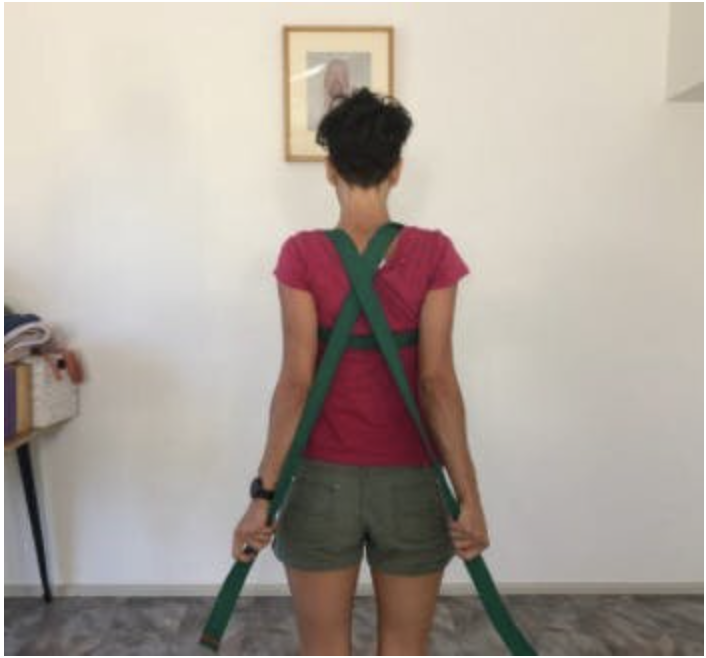
Rather I want to share with you one of my favorite practices for shoulder tension.
This practice should give your body the information and memory of how it needs to work when the body is inverted.

You just need a long thick belt.
Make sure the straps are at the top over the trapezius muscles and pull down and back with the straps to get the desired result.
If you would like to submit a question about home practice and receive the answer in these weekly Practice Points, you can below. Question related to specific injuries will not be answered.
Practice Point #61 Shoulder Blades
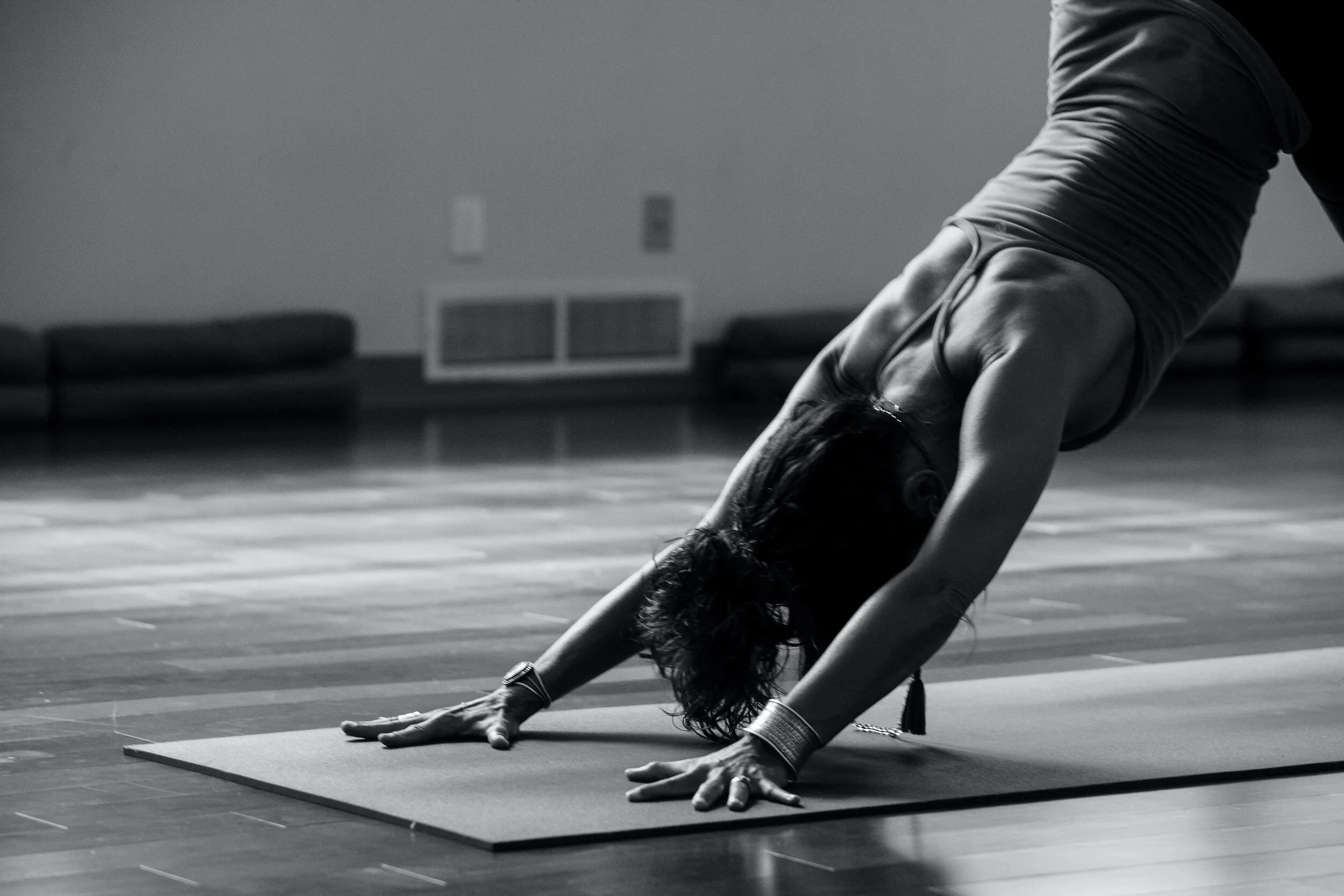
Do you have some tips on how to bring more attention to and activate my shoulder blades during downward dog?
I received a question from Julia from Australia. Their question is...
Do you have some tips on how to bring more attention to and activate my shoulder blades during downward dog?
I can give some tips for things to be mindful of and consider.
What is important to recognise with any posture is that we must change the way we practice the pose as our practice develops.
You can't continue to do downward-facing dog the same way as when you first started yoga. However, being sensitive to when we have to change the way we are doing the pose is not easy or obvious.
When you are in a class some instructions are for you, some are not. This is where we begin to learn this. Start to discern in a class if the instruction is really for you. If your armpits are open in downward facing dog and the teacher keeps giving the instruction to open the armpits can you see how this instruction is not for you and will potentially lead to you doing an injury?
This is why the practice of yoga must be a practice of both effort (Abhyasa) and surrender (Vairagya). Doing and observing.
Now for outer shoulder blade activation in downward facing dog here are my few points of observation.
Why do you want to activate your outer shoulder blades? Is this an instruction you need to do more?
What are your trapezius muscles (at the base of the neck and top of the shoulders doing) Often these muscles dominate and do all the heavy lifting taking the spotlight off the outer shoulder blades? If you can soften the trapezius muscles you will find your outer shoulder blades.
Become physically familiar with your outer shoulder blades and how they move. It is one thing to visualise them. Touch them. Raise your arms above your head, now place one hand on the opposite shoulder blade, and as you move the arm above your head around feel the movement of your shoulder blade so it is more tangible.
I hope that gives you some insight.
If you would like to submit a question about home practice and receive the answer in these weekly Practice Points, you can below. Question related to specific injuries will not be answered.

Practice Point #62 - Lower Back Pain
Could you show me some asanas for lower back pain and tight hips, please?
I received a question from Marie from the Ireland. Their question is...
Could you show me some asanas for lower back pain and tight hips please?
I am no stranger to lower back pain.
I have been managing a disk bulge for the last 10 years and I will have to manage it for the rest of my days.
To answer your question about some postures for lower back pain, it will depend on your level of pain and mobility.
In this case I am going to give just a few postures that are safe. Having said that when you try something new only hold for a short duration t see how it impacts your body.
You don't have to do them all, attempt one, see how it feels.
I hope that helps.
If you would like to submit a question about home practice and receive the answer in these weekly Practice Points, you can below. Question-related to specific injuries will not be answered.
Practice Point #63 - Rest Day
Alternate days practice of yoga is correct?
I received a question from Jon from India. Their question is...
Alternate days of practice of yoga is correct?
Everyone wants a day off:)
We all want a day off from parenting, from working, from caring for someone, we even now want a day off from doing yoga.
If you want a day off from your practice, I challenge you to look at your weekly practice schedule and adjust something.
It sounds like it is not in balance.
Yes, our daily practice is hard work, it is challenging, it is not easy, but we want to want to do it.
Not be asking for permission for a day off.
Rather than a day off, I would opt for a practice of just savasana or pranayama or a supine pose.
It sounds like you need a restful pose rather than a day off:)
If you would like to submit a question about home practice and receive the answer in these weekly Practice Points, you can below. Question related to specific injuries will not be answered.
Practice Point #64 - Correct Asana & Progress
With the current situation of not being able to go to class physically, how can I ensure I am doing the Asanas correctly and can take them to the next level? Do you have any recommendations for this process?
I received a question from Elisa from Germany. Their question is...
With the current situation of not being able to go to class physically, how can I ensure I am doing the Asanas correctly and can take them to the next level? Do you have any recommendations for this process?
Keep practicing and become familiar with the vrttis and klesas so that you can know if you are on the right path and making progress.
Vrttis are the five distinct ways that our mind behaves:
Pramana: correct or accurate knowledge
Viparyaya: incorrect knowledge
Vikalpa: imagination
Nidra: sleep
Smrti: memory
Kleshas or ‘afflictions’ are the five ways the mind can be poisoned.
Avidya (ignorance)
Asmita (egoism)
Raga (attachment)
Dvesa (aversion or hatred)
Abinivesah (clinging to life and fear of death).
At a guess if you are attending online classes and receiving instruction from an experienced teacher I think you can be confident you are doing the asana correctly.
As for making progress, keep practicing, stop doing and start observing and there lies the answer.
If you would like to submit a question about home practice and receive the answer in these weekly Practice Points, you can below. Question-related to specific injuries will not be answered.
Practice Point #65 - Flexible Mind Over Body
How might someone who is very stiff after 4-5 years of practice in Iyengar yoga continue to show up to the mat shifting a fixed mindset into a growth mindset?
I received a question from Danielle from the USA. Their question is...
How might someone who is very stiff after 4-5 years of practice in Iyengar yoga continue to show up to the mat shifting a fixed mindset into a growth mindset?
I love this question because it raises a very common hump I see students face and which I have also faced myself.
We have this notion that yoga will make our bodies more flexible and when this is not experienced we challenge the method.
The flexibility needs to come in the mind first. If the mind is rigid, the body is also rigid.
Can you be less attached or fixed in the mind with how you do a pose? Not only how you do the pose, but what the outcome of the pose is?
If the mind is fixed on achieving flexibility that looks a certain way, (like touching your face to your shins in paschimottanasana or getting one’s heels to the floor in dog pose), we are limiting ourselves by our thoughts of something being a certain way.
If the mind can simply observe the body in practice, and shift one’s focus from a particular outcome to experiencing whatever presents itself at the moment we are not only practicing yoga but becoming flexible... in the mind and soon the body will be too.
This does not mean being lazy or giving up halfway in the practice of the asana. One has to have a discriminative mind when one is practicing and practice honesty with oneself. We have to question our actions and choices and engage in what we are doing, with curiosity and compassion.
This is what practicing yoga is really all about... not the postures and becoming stretchy:)
If you would like to submit a question about home practice and receive the answer in these weekly Practice Points, you can below. Question related to specific injuries will not be answered.
Practice Point #66 - Too Flexible
What daily poses/practice would you recommend for someone who is very flexible and needs to work on muscle tone/strength?
I received a question from Kathrin from Australia. Their question is...
What daily poses/practice would you recommend for someone who is very flexible and needs to work on muscle tone/strength?
Well this is not a problem I have personally experienced, but I have worked with many students who have this problem.
You are correct in your thinking the muscles need to be strengthened and particularly at the joints and attachments.
I have never been to a gym, but I understand that at a gym they do exercises that shorten the muscles which builds bulking muscles, where in yoga we strengthen and lengthen the muscles.
So my guess is you need to do quick, short, repetitive secessions of exercises to build the muscles around the joints.
For example to build the vastus medialis oblique which is the muscle above and on the inside of your knee, I would do Warrior 1 moving in and out of the pose with a focus on pulling up this muscle.
Similarly I would do upward facing dog up and down in quick succession, squeezing the outer shoulder blades in to build the tricep muscle.
My approach would be many repetitions of any pose and quickly so that you are getting the muscles to fire up, then relax and this will help build the muscles.
Lastly, weight-bearing builds muscles strength, so postures like dog pose, plank, vasistasana etc where you are bearing your own weight will also help to build strength.
Practice Point #67 - Handstand
How do I learn to keep my legs up in Handstand while being away from the wall?
I received a question from Olive from Canada. Their question is...
How do I learn to keep my legs up in Handstand while being away from the wall?
Ok, so I'm guessing from your question you can kick up and stay in handstand at the wall and you want to progress away from the wall and stay up without the support of the wall.
Here are a few tips and things to practice before moving away from the wall. These things wil support you to balance away from the wall.
Learn to kick up with your right and left legs so that you don't have a preferred side. Learning to use both legs equally so one leg does not always drag you down.
Learn to kick up with both legs at the same time (bent) like a bunny hop. The core strength involved here will support you to stay up.
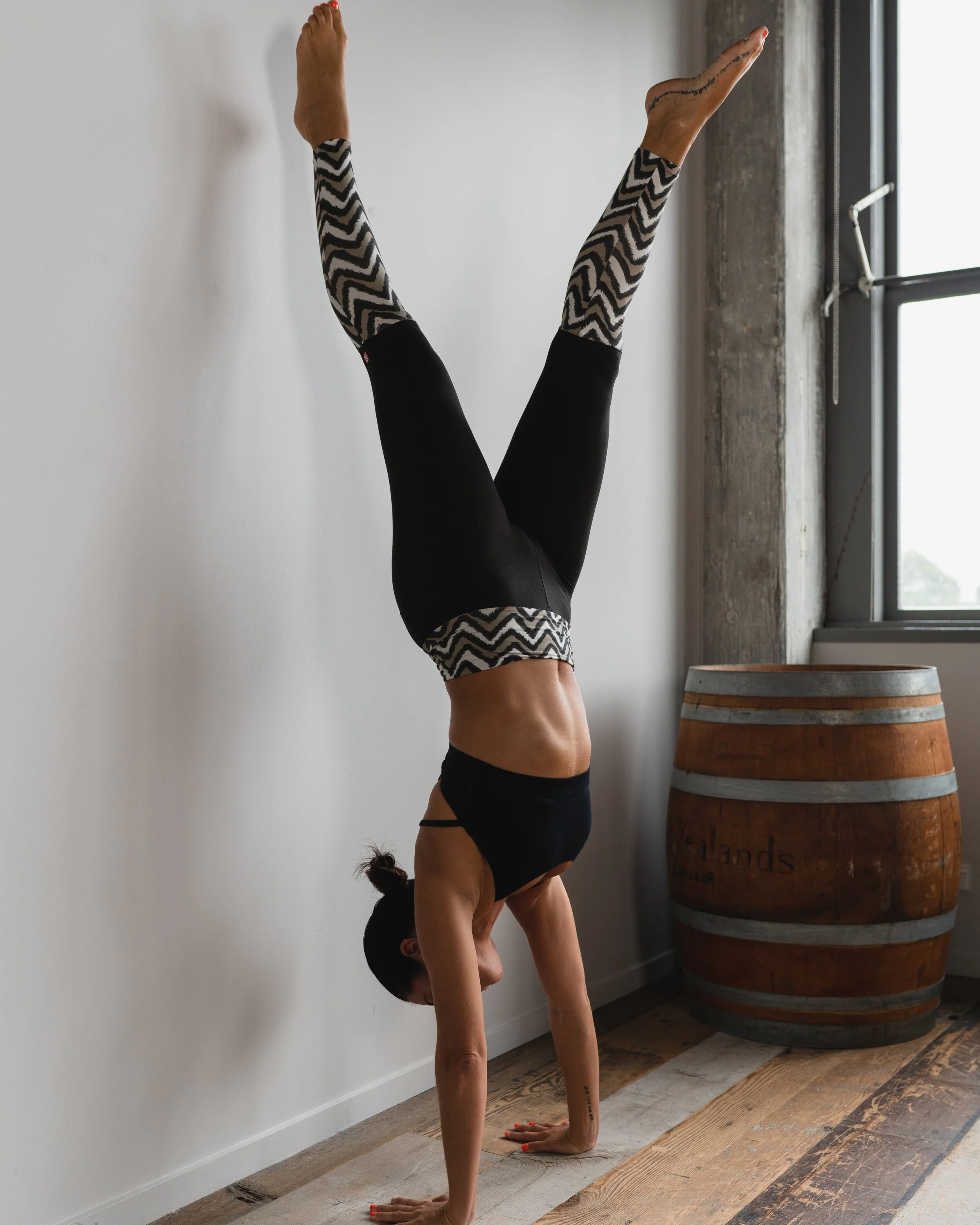
Move your hands 2 feet away from the wall and once you have kicked up and your feet are at the wall, scissor them so that one leg is forward and one back. slightly remove the back foot off the wall and hold the balance with the legs scissored. When you can do this then try and join the legs as you scissor them so you switch legs.
As you will see from this picture when the legs are scissored the point of balance is lower, so easier to achieve.

Have fun and smile when you are up:)
Practice Point #72 - Weekly Practice Program
Can you please give me suggestions on the weekly practice grid, as to how do I achieve the best out of my six day practice, barring Sunday as a rest day?
I received a question from Suresh from India. Their question is...
Can you please give me suggestions on the weekly practice grid, as to how do I achieve the best out of my six day practice, barring Sunday as a rest day?
I can give you some suggestions, but I am concerned your practice will become rigid and boring and you won't continue with it.
I would just suggest that each day you focus on a different area of the body.
Monday - Standing
Tuesday - Sitting
Wednesday - Backbends
Thursday - Inversions
Friday - Forward Bends
Saturday - Restorative
Of course, within this program, there is a lot of scope to change things as your body needs on any given day.
And perhaps some days you wish to continue what you practiced the previous day because you wanted to explore more. Don’t be too rigid.
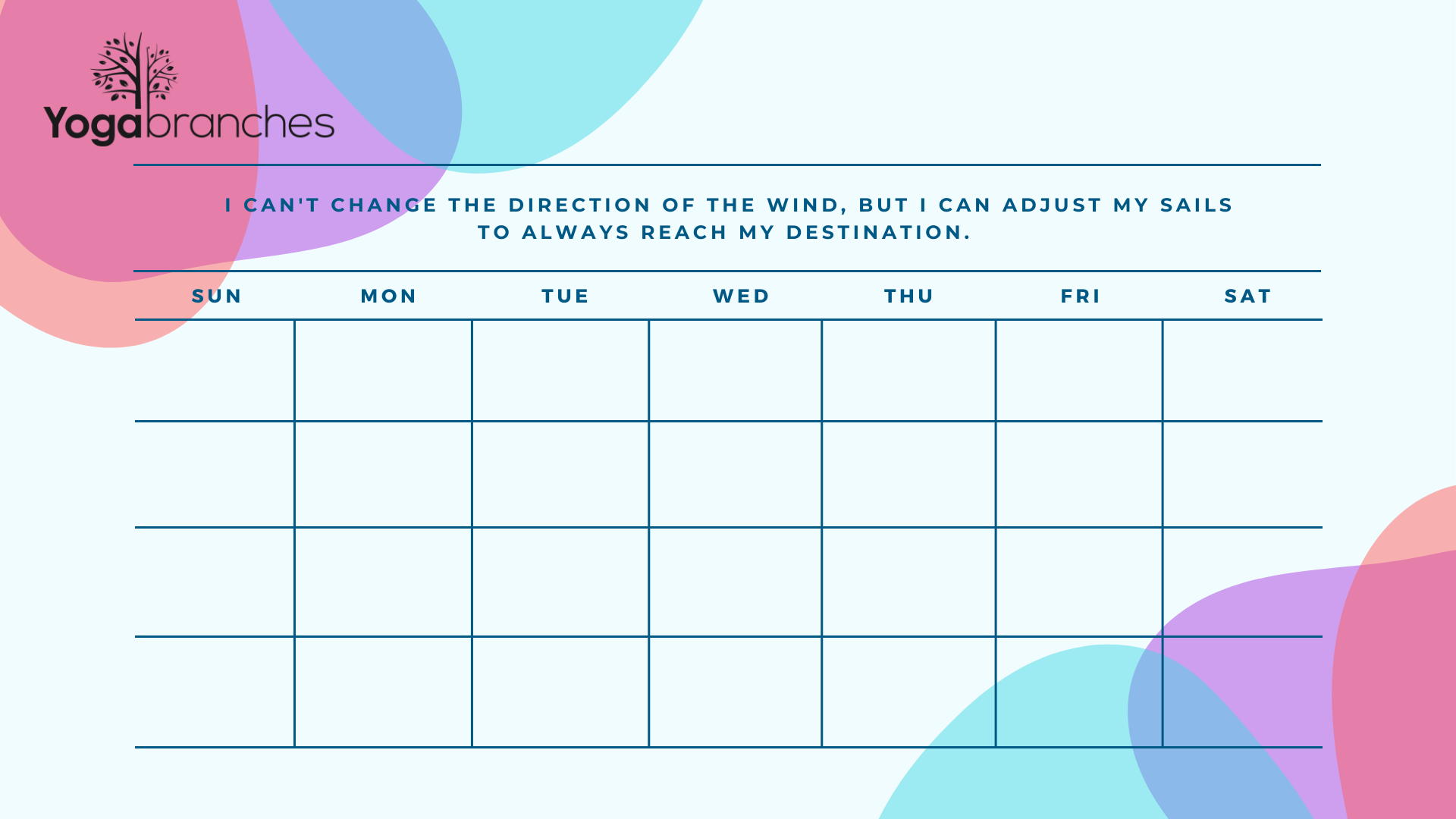
Here is a template calendar you can download and fill in for the whole month what you plan to practice to help keep you focused.

My point is, being prepared and having a plan is a good approach, but do not become rigid and limit yourself.
Remain curious and explore and play and your practice will prosper.

Practice Point #68 - Sitting Meditation Position
I want to sit cross-legged but even if I am sitting on a cushion, after 30min - 1hour,I feel so much pain in my ankles and on the end of the spine. It is quite impossible to straighten my legs right away and it is so painful....please help me to do exercises so gain flexibility with my ankles, knees in order to sit naturally and comfortably in such a simple asana for meditation. Thanks in advance and thank you so much for your valuable tips.
I received a question from Lilas from France. Their question is...
I want to sit cross legged but even if i am sitting on a cushion, after 30min - 1hour ,I feel so much pain in my ankles and on the end of the spine . It is quite impossible to straighten my legs right away and it is so painful....please help me to do exercices so gain on flexibility with my ankles, knees in order to sit naturally and comfortably in such a simple asana for meditation. Thanks in advance and thank you so much for your valuable tips.
What you experience is normal.
Sitting for a long period in one position inhibits blood flow to the joints and this is why you experience the discomfort in the pose and when moving out of the position.
Why do you want to sit in one position for so long without changing position.
I would just suggest that you try sitting on more height, change the crossing of the legs and also use blanket support under the ankles and knees.
More specifically I would roll a blanket or towel and place it under the cross of the ankles. The rolled towel will be pointing away from you.

The second rolled towel or blanket I would wrap around the ankle/shin so that each end lays under the outer thigh. This will help level the knees and reduce the imbalance.

Be gentle and look after your body, it is the home of your soul and like a temple we want to care for it like that of a child.
Practice Point #70 - Forward Bends
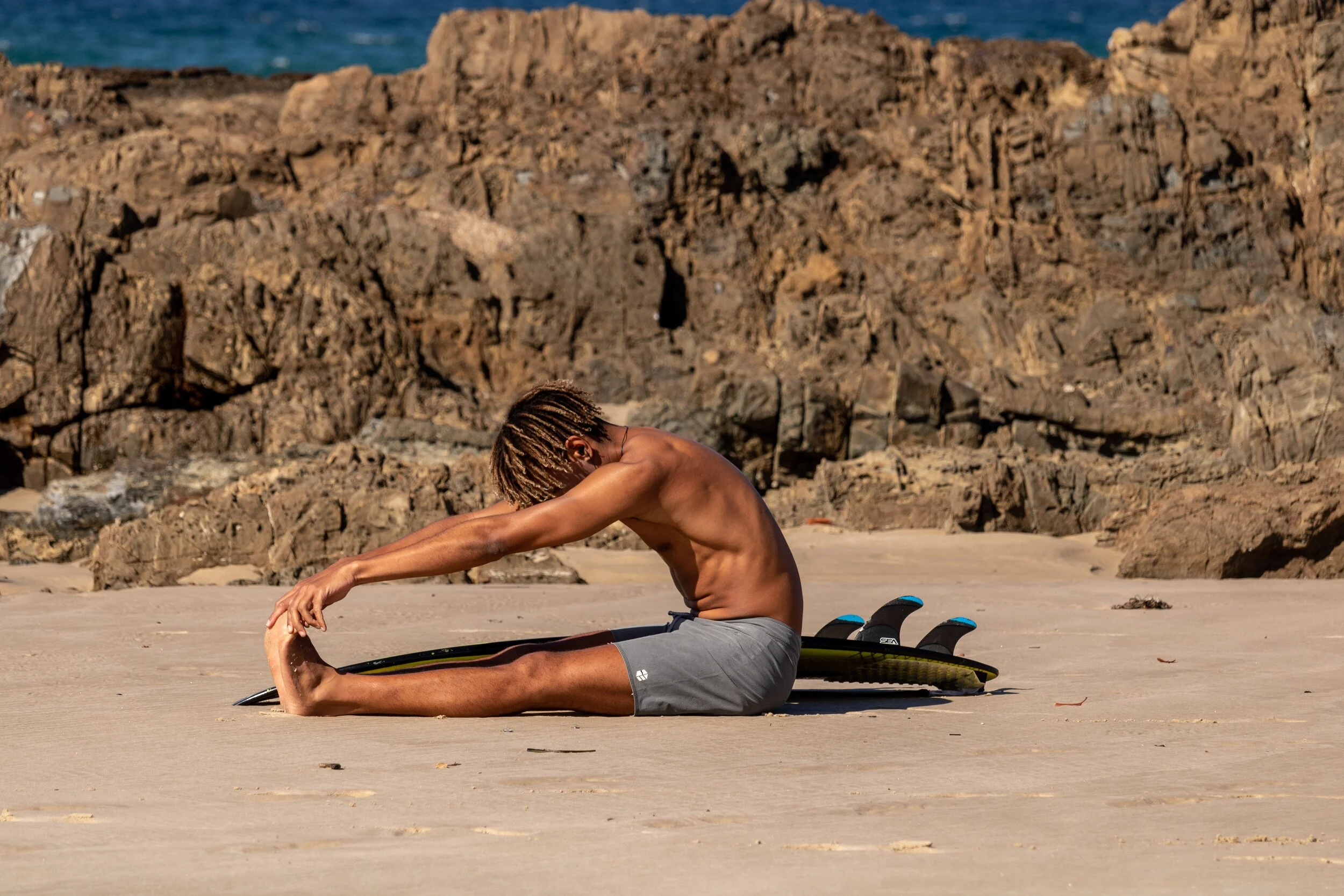
I feel very challenged with doing Forward Fold poses as I have very tight hamstrings. How can I get to a beginning and then progress through deepening my forward folding practice? Are there any regular drills you would recommend?
I received a question from Satya from the USA. Their question is...
I feel very challenged with doing Forward Fold poses as I have very tight hamstrings. How can I get to a beginning and then progress through deepening my forward folding practice? Are there any regular drills you would recommend?
Forward bends are challenging for many people, so know that you are not alone in this struggle.
There are a few things I would like you to consider.

1. Are you doing more things that are shortening your hamstrings than stretching them? For example, you might be doing yoga (stretching hamstrings) once a week, but then cycling or running (shortening hamstrings) 5 days a week. This might be inhibiting your progress. Start with getting a better balance if this is your situation.
2. Be patient! Don't force and let go. I believe that a lot of hamstring tightness is not just muscle tightness but holding on to other things, like stress, fear, trauma etc. Exhale and surrender when you do forward bends.
3. Have you tried doing forward bends sitting on the edge of a chair? The more your raise the seat the more freedom you will find in forward bends and this can be a very good place to start.
I hope this gives you some direction.