
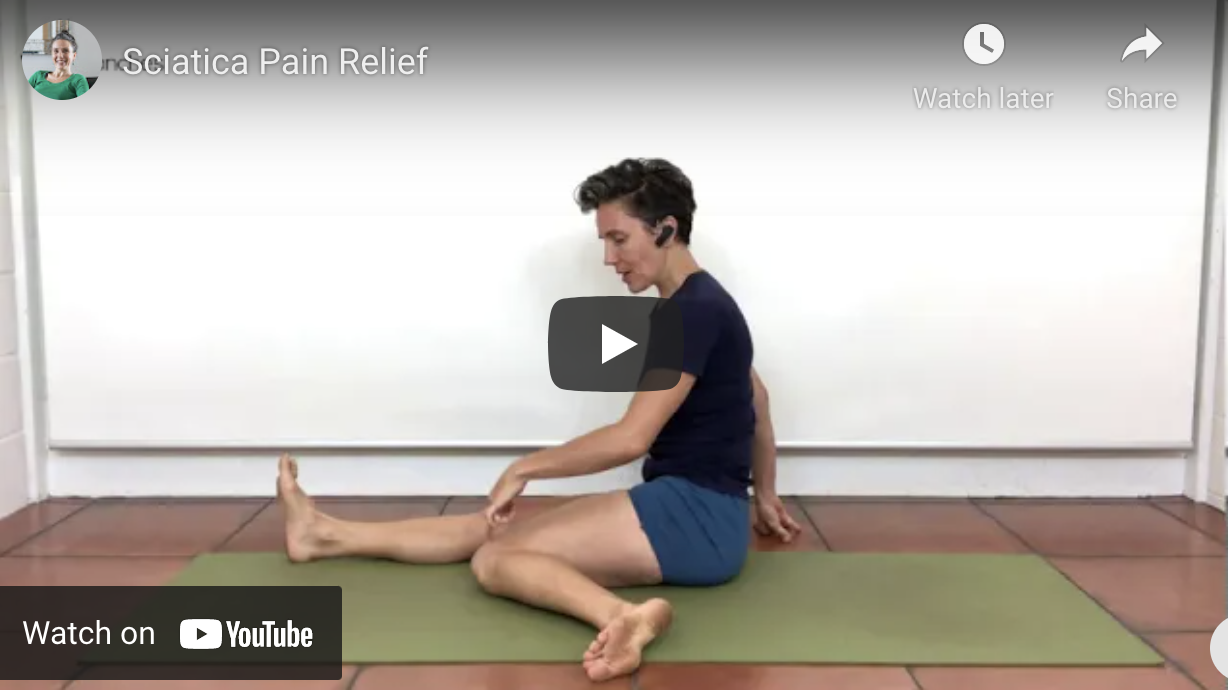
Practice Point #33 - Sciatica
What would be a good asana/s for sciatica?
I received a question from Shiva in Australia. Their question is...
What would be a good asana/s for sciatica?
This is a common problem and while what has caused the pain is different for all, generally speaking, sciatic pain is caused when the sciatic nerve is being impinged.
The approach is to find positions that can create space so the nerve is not being impinged.
Without seeing the body and it's ability I would be reluctant to suggest specific asana.
However, there is one exercise that I think is helpful to all. I've made a video on it for you to see.
I hope this helps.
I have hundreds of videos like this, which are answers to common problems from the community. They are all available as part of the Yogabranches membership. JOIN HERE to access them all.

Practice Point #35 - Virabhadrasana I
While practicing Virabhadrasana 1 I mostly use my lumber how to avoid that?
I received a question from Rashmi in India. Their question is...
While practicing Virabhadrasana 1 I mostly use my lumber how to avoid that?

Great question, this is super common to see students sink in the lumbar spine in this posture.
In Warrior 1 we want to try and have the front and back body perpendicular to the floor. Rather the trunk tends to lean forward.
Aim for getting the trunk upright which starts with the pelvis.
A couple of instructions I use when I see students overdoing it in their lumbar spine in warrior 1 are...
Lengthen your tailbone down
Take the sitting bone of the bent leg to the back of the knee
Lift the pubic bone up to the naval
I hope that helps when you next practice Warrior 1.
Practice Point #36 - Upper Body Strengthening
Can you suggest certain asanas to tone the upper body and arms?
I received a question from Priya in India. Their question is...
Can you suggest certain asanas to tone the upper body and arms?
I can and my answer might be terribly disappointing, but it is often the simple things that we do regularly that bring us the most results.
Before I give you a very simple answer can I tell you a short story?
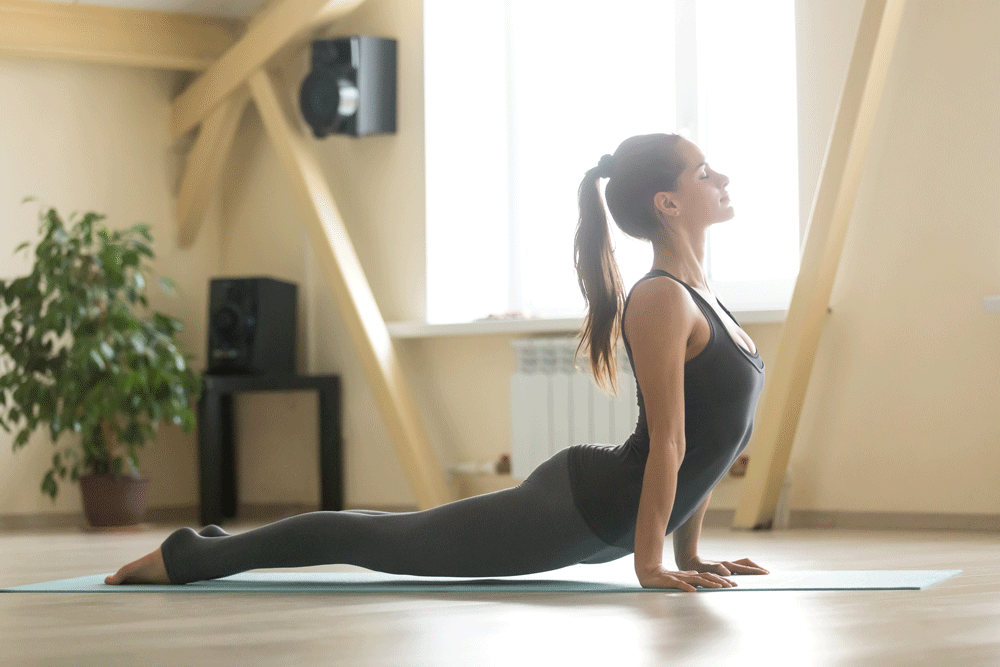
When I had a disk bulge, I followed the Mckenzie technique which included among other things doing 10 repetitions 5 times a day of Urdhva Mukha Svanasana.

I could not believe how toned my upper arms were after doing this every day for a few weeks.
And bonus my back was hugely improved too.
If you practice Adho Mukha Svanasana and Urdhva Mukha Svanasana daily and with multiple repetitions, I can guarantee you will build your upper arm strength so posture like handstand come more easily.
Practice Point #37 - Tight Hamstrings
Kindly suggest some asanas to work on tight hamstring muscles. It causes the knee to bend, in effect, I am unable to work on the knee caps?
I received a question from Archanaa in India. Their question is...
Kindly suggest some asanas to work on tight hamstring muscles. It causes the knee to bend, in effect, I am unable to work on the knee caps?
I teach multiple private classes a week and at least one of these private classes if to address tight hamstrings.
I am afraid that people think there is a magic potion to relieve tight hamstring, and a private lesson will cure them.
We need to work with the hamstrings in our practice daily to see results and even then we can get on the mat and feel they are as tight as ever.
I have noticed that during my ovulation time all my muscles and joints are tight, and I particularly feel my hamstrings at this time.
Be considerate of what else might be occurring in your body and take care, not to overdo the stretching when your body very much needs to rest.
Having said that daily asana to include in your practice to stretch the hamstring include... but not limited to
Adho Mukha Svanasana
Uttanasana/Ardha Uttanasana
Parsvotanasna
The question is how do you practice them?
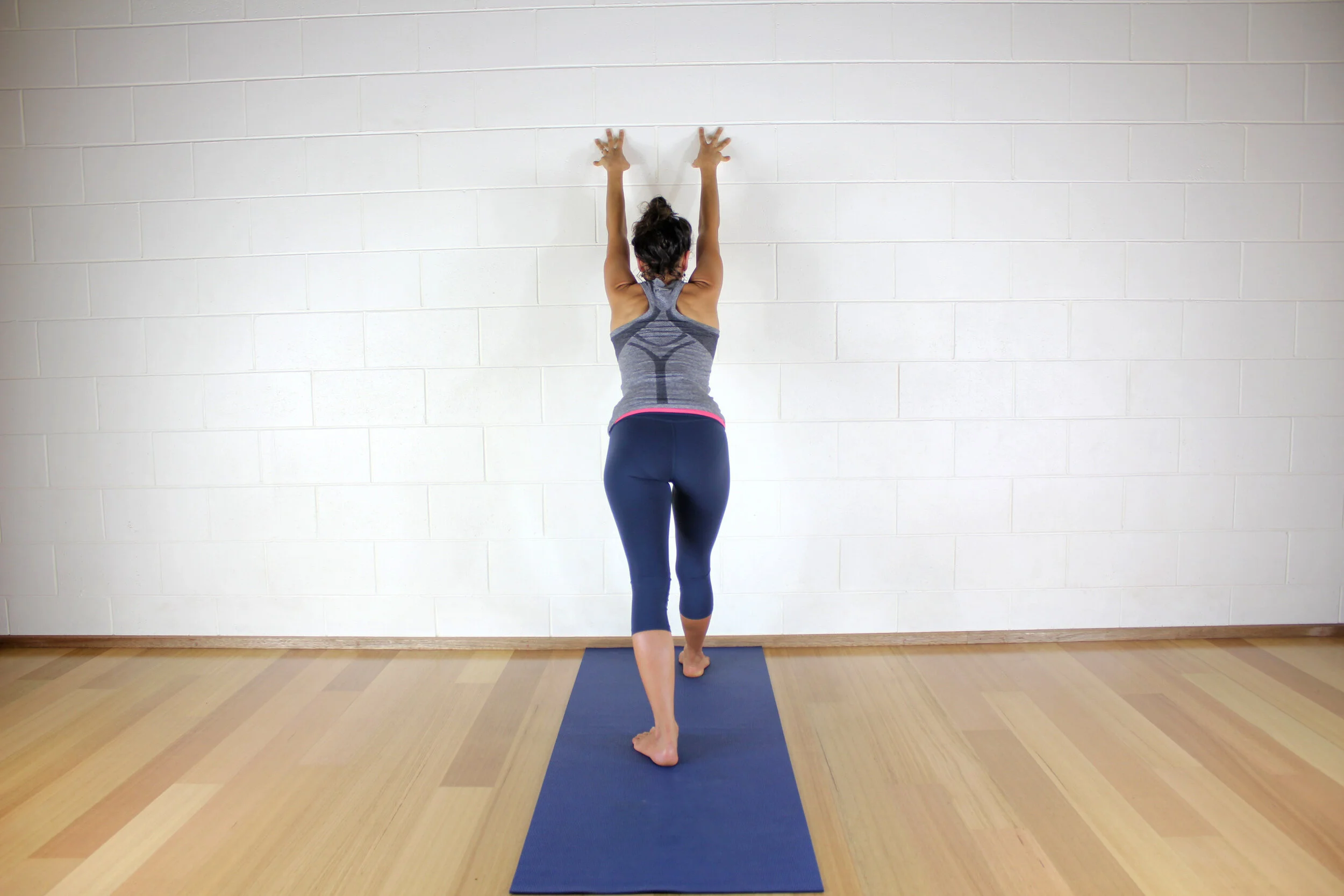
Take support so that you can do the pose and fully extend the knees. Do not attempt to do these poses as Guruji does in LOY.
Rather
DO Dog pose with the hands on a chair.
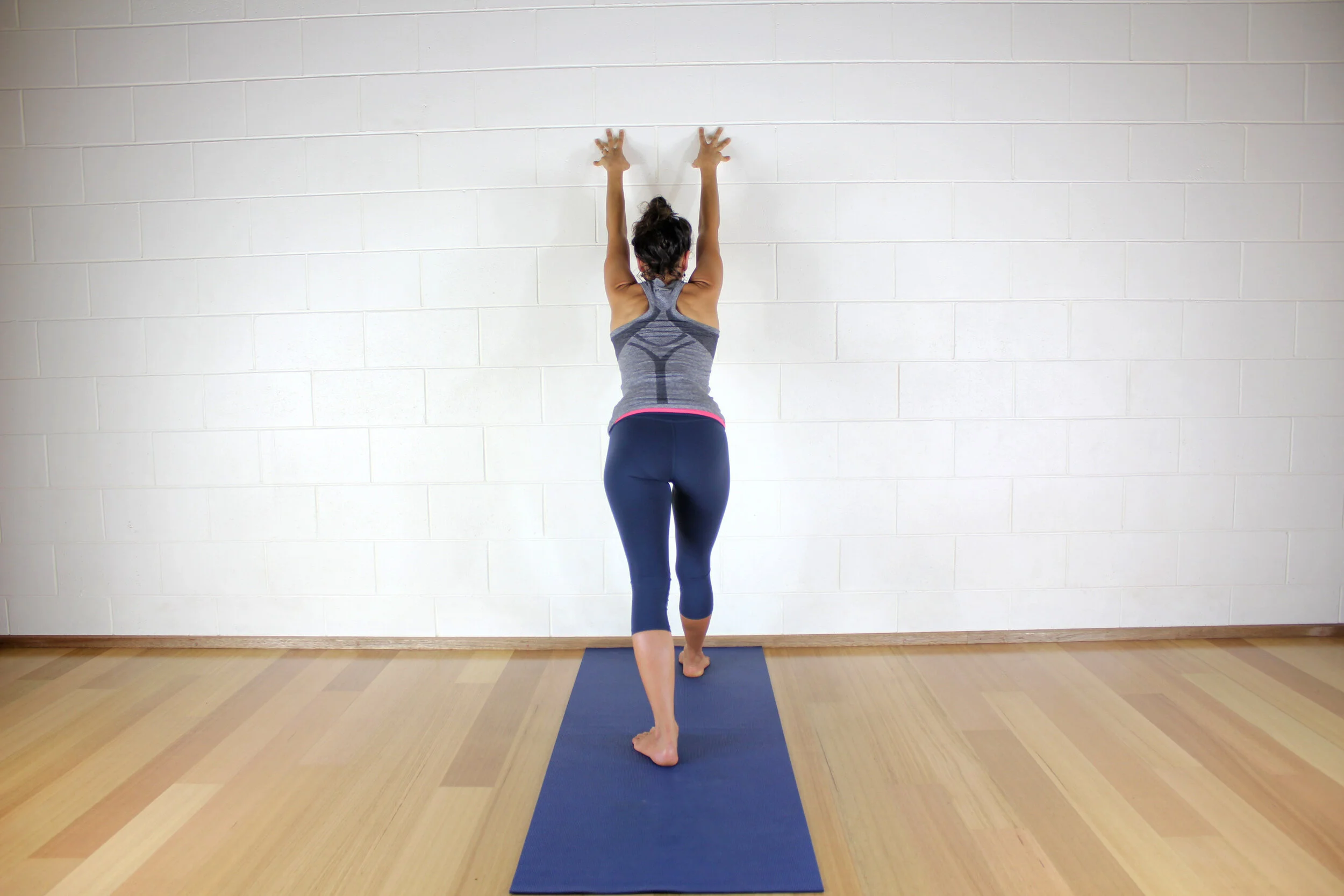
DO Parsvotanasana with the hands up the wall or on a chair
DO Uttanasana with hands on the shins concave or hand at the wall
Take the necessary support so that you can fully extend the knees and the spine.

Practice Point #38 - Pelvic Tilt
I feel like I am unable to take my lower spine - lumbar and sacrum area into the body in Adho Mukha Svanasana, it's impossible to take into the body in forward bends like Paschimottanasana. Even when I use height under my buttocks. Also, I feel I have a posterior pelvic tilt and maybe that makes it even harder. Could you please give me some tips to correct this issue?
I received a question from Radhika in India. Their question is...
I feel like I am unable to take my lower spine - lumbar and sacrum area into the body in Adho Mukha Svanasana, it's impossible to take into the body in forward bends like Paschimottanasana. Even when I use height under my buttocks. Also, I feel I have a posterior pelvic tilt and maybe that makes it even harder. Could you please give me some tips to correct this issue?
This is a common feeling for students to experience. So too is having a posterior pelvic tilt.
I am glad to hear you attempted height under the buttocks in the sitting postures, if you did not feel a difference then I would suggest more height and taking the time to move the sit bones wide apart, and back.
Often students descend the heels in Adho Mukha Svanasana prematurely.
In Adho Mukha Svanasana bend your knees, lift your heels and raise the sitting bones up to the ceiling to get the sacrum into the body. You can also attempt this with your hands on the chair to get more access to the spine.

I hope this gives you some access to a more anterior pelvic tilt.
Practice Point #39 - Heel Pain in Standing Poses
I develop pain in my heel in standing asanas. Any suggestions you can provide will be appreciated?
I received a question from Rashmi in USA. Their question is...
I develop pain in my heel in standing asanas. Any suggestions you can provide will be appreciated?
Amazing you should ask this question, just in class yesterday I had a student ask me the same question.
Because she was in front of me I was able to see her posture and address the issue.
So let me use this student as a case study.
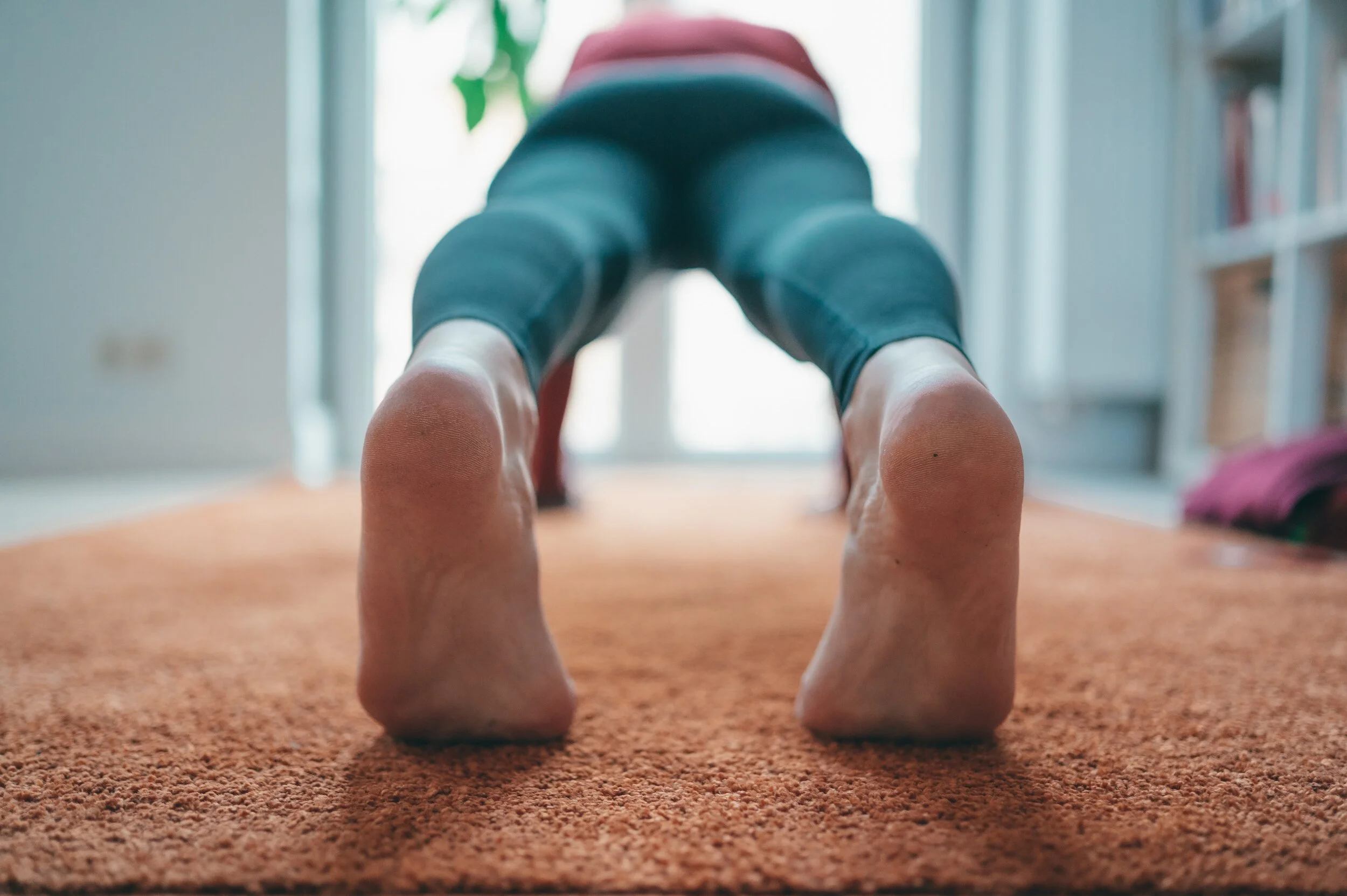
She was sinking into the heel, which is why she felt pain in the heel.
I could see she was hyperextending her knee.
Instead of pulling the kneecap up, she was pushing it back.
This caused the energy and weight to go down to the heel.
I asked her to micro bend her knee and to draw the muscle on the inner knee up to the groin.
It was challenging for her, but she managed and she said the pain was no longer in her heel.
I hope this gives you a clue.

Practice Point #40 - Practice & Old Age
I am a senior citizen can I do asanas like backbend without hurting myself - I mean is to go deeper and deeper in asanas?
I received a question from Jaymoni in Malaysia. Their question is...
I am a senior citizen can I do asanas like backbend without hurting myself - I mean is to go deeper and deeper in asanas?
Good question.
I'm still quite young:)), so I do want to preface this advice with my lack of experience inhabiting an old body:)
But I am getting older every day and notice I don't bounce like I used to.
Yes, I believe we can still practice deep backbends, but we have to acknowledge that we won't bend like we did when we were 20 years old.
Backbends can be an excellent preventative for osteoporosis which comes with old age.
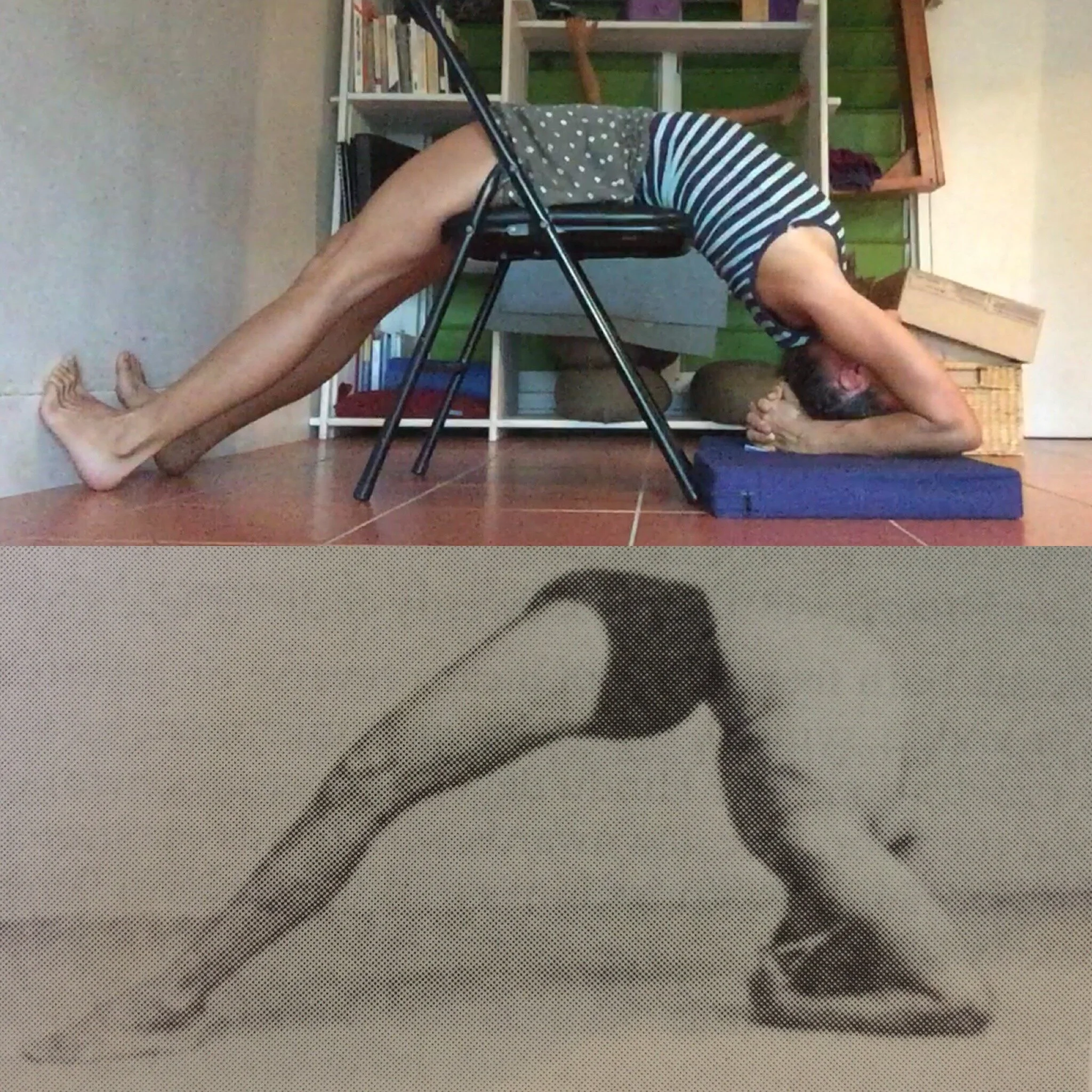
I would recommend working with support. You will be able to go deeper into the backbends if you have support.
With support, you will be able to hold the posture for longer and penetrate deeper.
Whatever you do, don't stop practicing:) Just find ways to modify and adjust your practice to match your aging body's limitations.
You can see many pictures of Guruji practicing backbends when he was older with the support of chairs, benches, stools etc.

Practice Point #41 - Parivrtta Trikonasana
Why is it easier to do parivrtta trikonasana with the back heel up?
I received a question from Alison in England. Their question is...
Why is it easier to do parivrtta trikonasana with the back heel up?
I am sure you are not the only one who feels this.
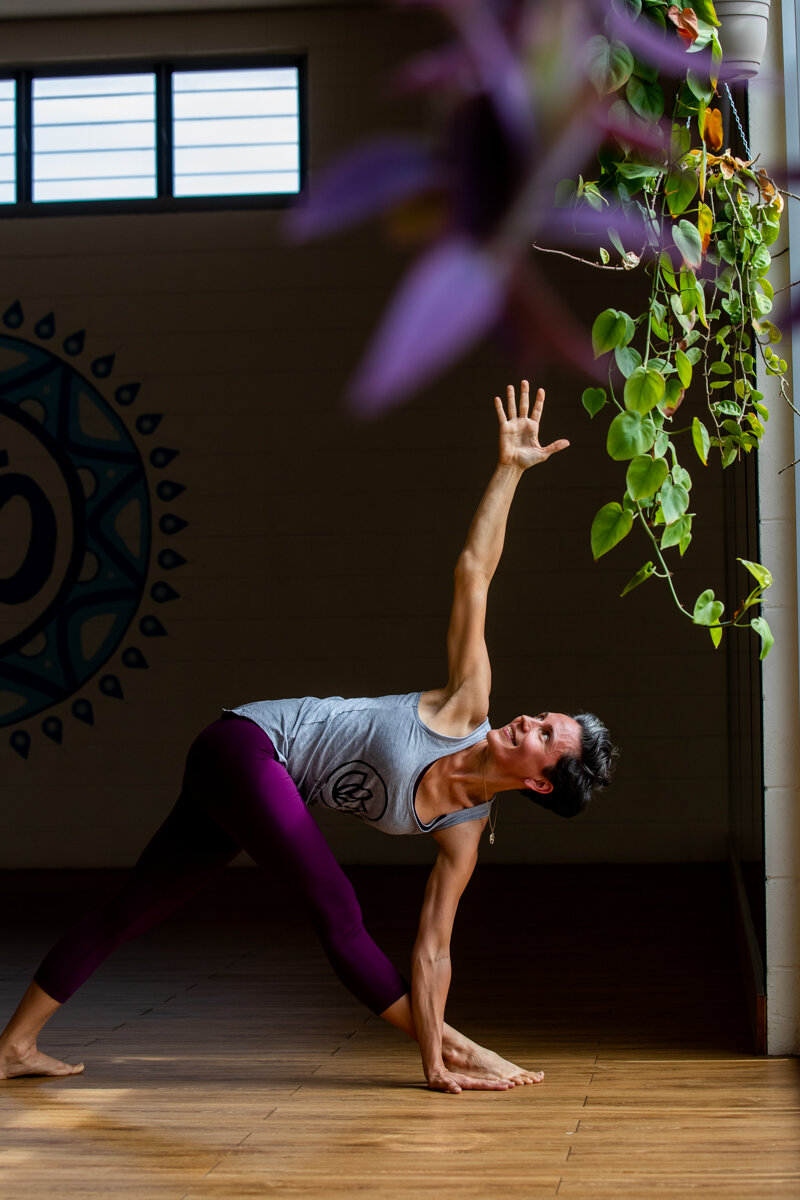
It is because it gives more freedom to the hips.
With the back heel up you are able to better wrap the back leg hip around to the front which is necessary in order to bring the hand to the floor outside the foot.
Essentially there is further to reach with the back heel down, making it a more intense stretch.
Practicing with the heel up initially is a great way to get into the shape of the posture.
When your confidence and balance improve gradually lower the heel height until eventually it reaches the floor.


Practice Point #44 - Yoga for Mothers
I have a 5-month-old and two older kids and I’m struggling to get back into regular practice. Can you recommend some key focus areas/asanas for this stage of motherhood?
I received a question from Kellie in Australia. Their question is...
I have a 5-month-old and two older kids and I’m struggling to get back into regular practice. Can you recommend some key focus areas/asanas for this stage of motherhood?

With kids of my own, I am very familiar with the struggle you currently have of making a regular practice.
From my own experience, this is what I did.
I practiced before my kids woke (and they were early risers). But getting ME time in before the kids were up to was crucial to the rest of my day in which I knew I would not get any ME time.
Fill your cup, so you can then give it to others.
Also, my kids would wake just before I finished, this was an excellent opportunity for me to train them. I had a mat and yoga books set up ready for them, they could do some yoga, watch, or more often leave because it was boring.
I set really clear boundaries. They were not allowed to climb on me and when I was doing savasana they had to leave the room.
Sometimes I would give them my phone to take photos of me which is fun for them and good for you later to see your poses:) They learned savasana was the last pose and knew they would have me soon.
As for what to practice that depends on how you feel.
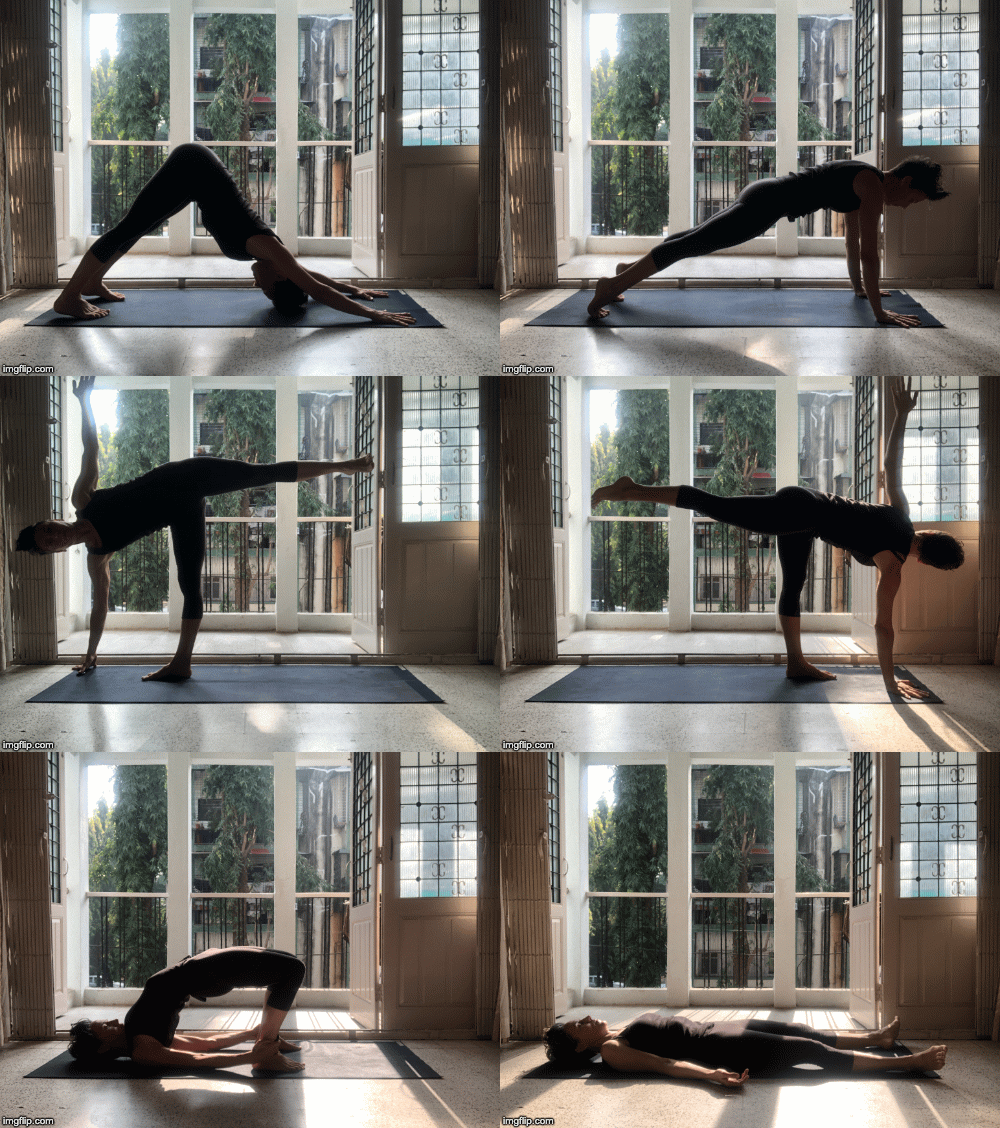
If you are breastfeeding, includes lots of arm positions to release your shoulders.
If you are exhausted do restorative.
If you want to boost your energy do backbends.
Always practice your inversions:)
Good luck and don't give up.
Practice Point #46 - COVID & Weight Gain
How can we use our yoga practice to help shed those Covid Quarantine pounds?
I received a question from Laura in USA. Their question is...
How can we use our yoga practice to help shed those Covid Quarantine pounds?
Good question and I am sure you are not the only one thinking this.
The question is how much physical exercise did you do before COVID to keep a healthy weight?
If you walked or ran kilometers everyday to maintain a healthy weight being able to match this with your yoga practice is going to be a big challenge.

I am guessing it will require a huge number of surya namaskar to match that kind of cardio vascular effort.
Absolutely you will need to increase the vigor in your practice if you wish to shed kilo's but I am afraid to say that there are probably other factors involved, not just exercise.
Diet and what you are eating will need to change if your level of physical activity is not the same. You won't need to eat as much, so simply cutting down your portion size might help.
Lastly stress is a big player in weigh gain and loss. If some people when they are stressed they lose weight and for other they gain weight.
Maintain a practice of restorative postures to help keep your stress levels under control.
Good luck.

Practice Point #48 - Depression
I am a yoga teacher and I still suffer from deep depression and low self-worth from past complex trauma. I struggle with my practice and can’t seem to roll out my mat. Is there a quick fix asana practice that will lift the mood and help my Cervical/SI/thoracic recovery? I know this is a lot to ask.
I received a question from Alexis in the United Kingdom. Their question is...
I am a yoga teacher and I still suffer from deep depression and low self worth from past complex trauma. I struggle with my practice and can’t seem to roll out my mat. Is there a quick fix asana practice that will lift the mood and help my Cervical/SI/thoracic recovery? I know this is a lot to ask.
Wow, let me do my best.
1. No matter how low you are feeling or how uninspired, roll out your mat and get on it. Even if you only do savasana. The likely hood is you will start with one pose and it will lead to another and you will feel better for moving, even if you only do three poses.
2. Being a teacher we have high expectations of ourselves and our practice. Go easy and be kind with yourself, imagine you are a student of your own, and your student tells you all the problems you have. Treat yourself with the same empathy and compassion you would your student.
3. Supported backbends will help shift the depression. As for the back and neck issues without seeing your body I would not want to recommend anything.

Take care.

Practice Point #49 - Restorative Yoga
Is it possible to do Restorative Yoga without props?
I received a question from Theresa from the USA. Their question is...
Is it possible to do Restorative Yoga without props?
In short YES!

Restorative yoga is defined as yoga poses that restore the bodies nervous system.
If you can be in the posture without support and the body is at ease, then I believe you can do restorative yoga without props, however you will possibly not be able to hold the pose for long.
Why would you do restorative yoga without props?
We have props all around us and they are there to support us so we can hold the postures for longer and be more deeply rejuvenated.
Don't be limited by the bolsters and bricks that you see in Iyengar pictures.
Folded blankets, firm couch pillows, towels, coffee tables and so much more of the items we have in our house hold provide all the props we could wish for.
Be creative, use what you have around you and you will quickly start seeing every piece of furniture as a prop.
Practice Point #16 - Pain in Backbends
Is it supposed to hurt in the back in salabhasana?
I received a question from Laurie in USA. Her question is...
Is it suppose to hurt in the back in salabhasana?
The word 'hurt' opens up a can of worms.
Does 'hurt' mean pain, and if so to what degree.
Does 'hurt' mean discomfort?
Does 'hurt' mean 'this is bad and I am going to do damage'
What 'hurt' means for one person is different for another.
As a teacher if a student declares something hurts, then we need to respond. We need to ask questions to understnad what 'hurt' means to them.
I have never understood Yoga to be pleasant and easy. I am OK with experiencing discomfort even pain when practicing, but this comes with a sharp radar for understnading if the pain is good or bad.
We learn this in yoga, to dicern if it is something we should sustain or surrender.
This is what we are learning in life right?
How we respond in the asana helps us to better respond to challenges in life.
So to conclude, if a student says 'it hurts' or if you are in an asana and feel pain I ask myself the following questions.
Is this good pain or bad pain. Good pain is usually a stretch, release and while it is intense it brings relief afterwards. Bad pain is usually sharp, acute and or felt in the joints.
If it is good pain observe it, notice it, sustain it and then release and again observe, what can you learn from it.
If it's bad pain ask your teacher or self what can do to shift this, perhaps a small action is required to shift it or perhaps you need to come out and not do the poses.
Only the student can know the answers and that is part of the journey as a practitioner. Learning to listen inwards and respond with skillful action.
Let me finish with 'Ahimsa' Non violence, one of the five yamas to observe and practice.
Never stray from the yamas and niyamas and if in doubt about something return to them and they will guide you.
If you would like to submit a question about home practice and receive the answer in these weekly Practice Points, you can below. Question-related to specific injuries will not be answered.

Practice Point #1- Repetition
We often associate repetition as a bad thing, especially if we practice the same poses every single day and our practice is boring and repetitive.
Practice Pointer #1- REPETITION
We often associate repetition as a bad thing, especially if we practice the same poses every single day and our practice is boring and repetitive.
In the recent 21 Day Challenge I hosted, the focus was on repeating sequences to go deeper and get more creative with our practice. So I feel super inspired about repetition ATM.
And I'm not the only one.

My tip for the week is...
When you repeat poses don't do them exactly the same way each time, find new ways to practice the same pose. For example, try it with different props, flip the pose, go into it a different way, do it upside down or backward :)
That's it, folks. I said I would keep it quick and short and hopefully useful.
If you would like to submit a question about home practice and receive the answer in these weekly Practice Points, you can below. Question-related to specific injuries will not be answered.
Practice Point #2 - Knee Injury
Can you suggest a sequence for endometriosis?
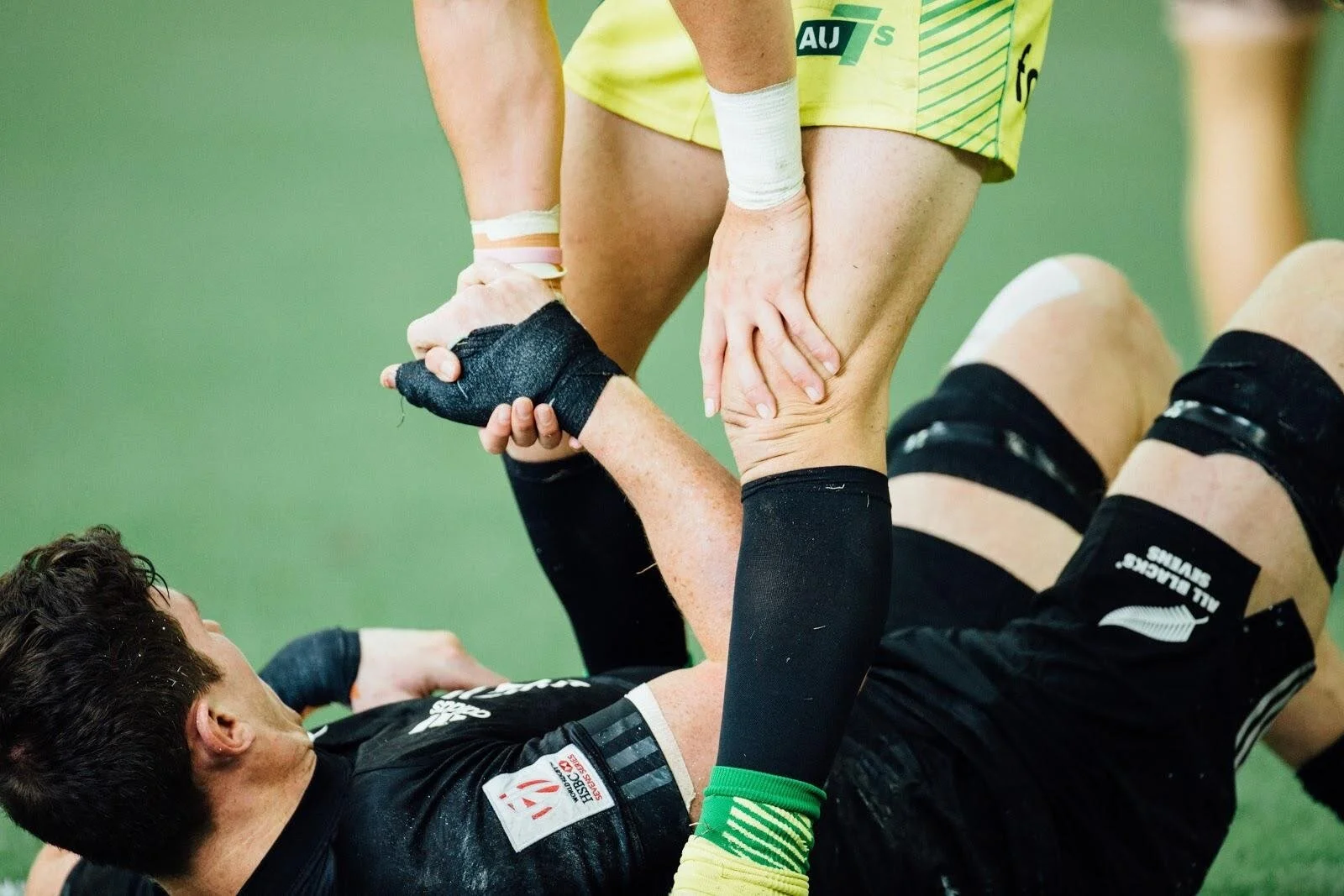
I have injured my left knee. How does one heal and continue your yoga practice?
I received a question from Susan from South Africa. Their question is...
Can you suggest a sequence for endometriosis?
I have injured my left knee. How does one heal and continue your yoga practice?
Big questions to answer.
How to move forward with the physical postures is not something I can help you with within the blog.
But you can find all the support you need for this in the Yogabranches Home Yoga Practice Membership.
I’ve had knee surgery twice and recovered to have a satisfying practice:)
How does one heal and continue your practice?
They go together. Your knee will heal with time and you will find you can practice more yoga.
But first, you need to modify your practice for your knee.
When we have an injury usually there is more mental work to be done than physical.
Like letting go of what you could be used to do and coming to terms with the limited practice you can now do.
Look at it positively. Rather than thinking about all the things you can’t do. Think about all the poses you can do and practice them.
Learn about the poses you can do that will actually be healing for the knee and you will be inspired to practice these because you know you are doing yourself good.
Most of my injury healing happened when I was in acceptance of it, rather than resisting it.

If you would like to submit a question about home practice and receive the answer in these weekly Practice Points, you can below. Question related to specific injuries will not be answered.
Practice Point #3 - Tight Shoulders
My shoulders would have to be the stiffest and challenging area for me to work with so I'm happy to respond to this question with confidence.
I received a question from Paula in England about what asana to practice daily to work with tight shoulders.
My shoulders would have to be the stiffest and challenging area for me to work with so I'm happy to respond to this question with confidence.
If you are a member of Yogabranches Home Yoga Practice Membership type shoulders into the search field and you will find an array of videos to follow.
If you are not a member...
PRACTICE POINTER #3
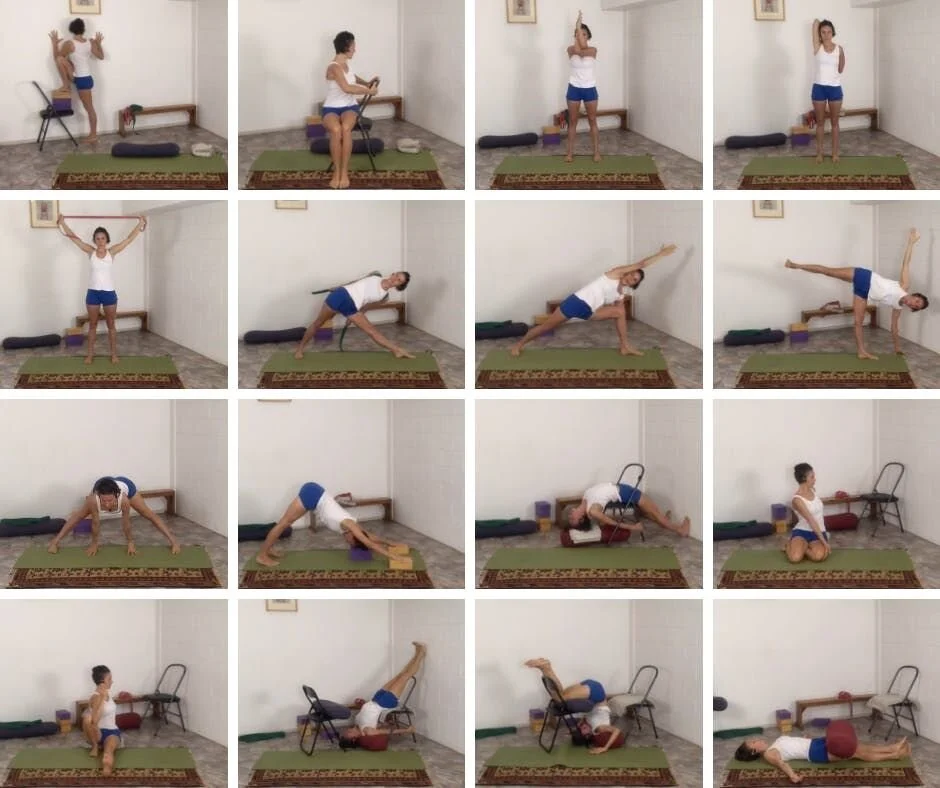
Here is a sequence that is general and will help to open the shoulders. If there are poses you are not familiar with or have not to be taught by a certified teacher, skip them and just do the familiar poses.

Good luck and I hope you find some relief with regular repetition of this sequence.
If you would like to submit a question about home practice and receive the answer in these weekly Practice Points, you can below. Question related to specific injuries will not be answered.
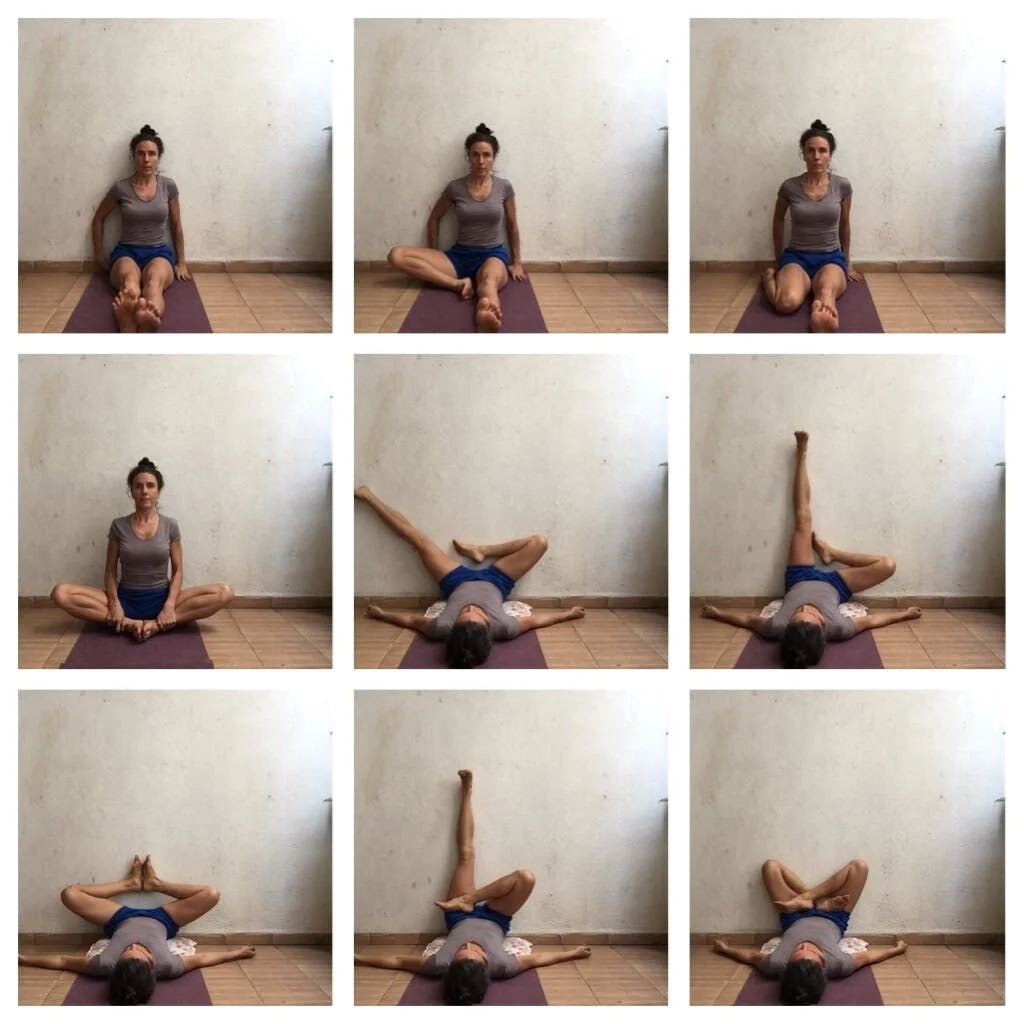
Practice Point #4 - Padmasana
Again something I have struggled with for years because of a torn meniscus, but with years of practice, I love to do Padmasana now.
I received a question from Yunice in Singapore about how to approach Padmasana
Again something I have struggled with for years because of a torn meniscus, but with years of practice, I love to do Padmasana now.
PRACTICE POINTER #4
Here is a sequence that helps to work towards Padmasana.
There is something special about lying on your back with the legs up the wall that makes it more accessible.

Give it a try, but with caution. Padmasana does not come overnight and if the hips are tight the knee will feel pain.
If you would like to submit a question about home practice and receive the answer in these weekly Practice Points, you can below. Question related to specific injuries will not be answered.
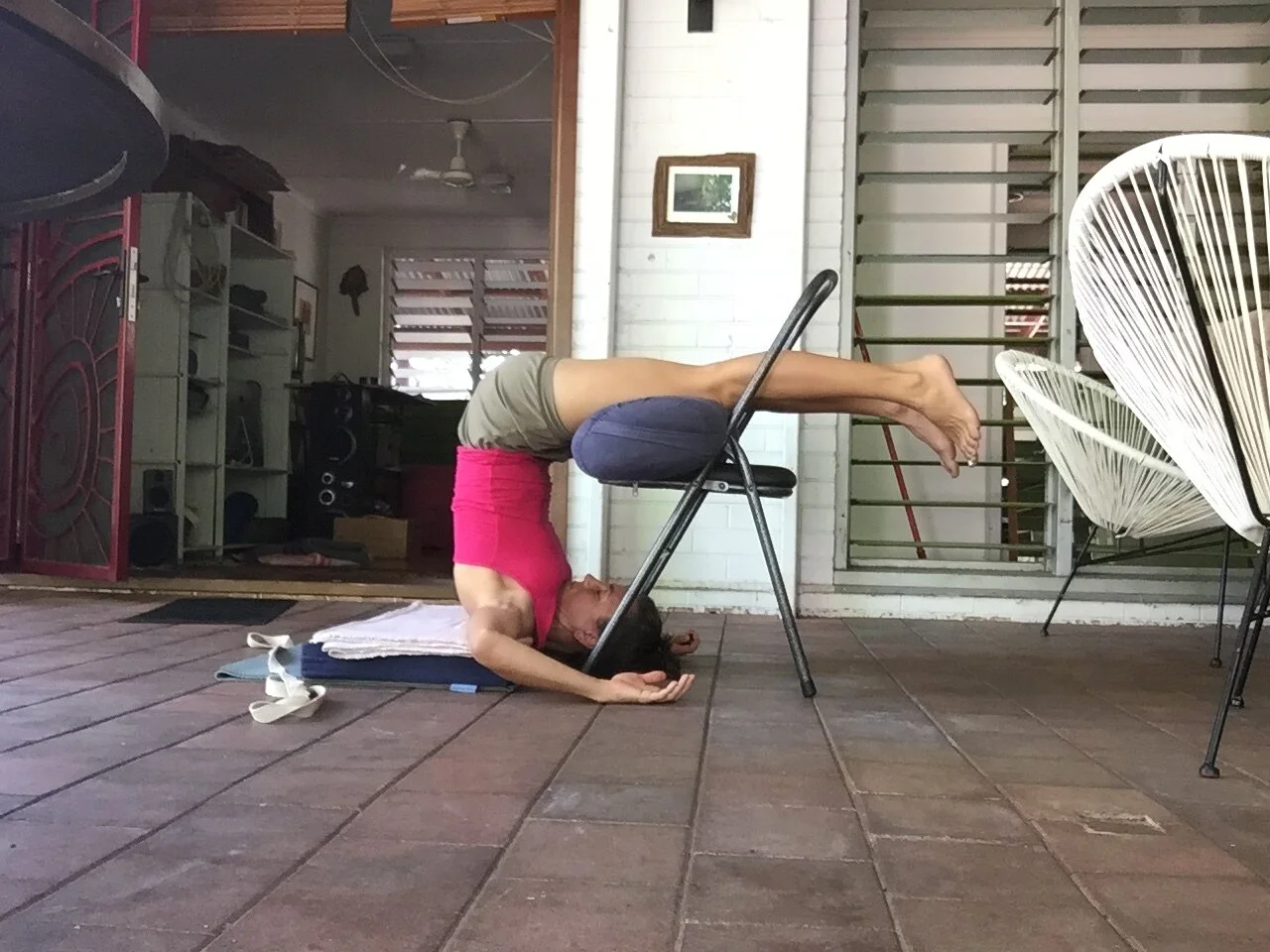
Practice Point #5 - Restorative
My question then, is regarding doing a 'restorative' practice ... do you recommend this be done only when you feel the body needs to, or should yogi's be getting into good habits of 'balance', and doing restorative work at least once a week?
Today I want to answer Tracy's from Tanzania question.
My question then, is regarding doing a 'restorative' practice ... do you recommend this be done only when you feel the body needs to, or should yogi's be getting into good habits of 'balance', and doing restorative work at least once a week?
PRACTICE POINT #5
Don't wait till you are exhausted and run down before you practice restoratives, by including them in your daily/weekly practice you will hopefully avoid burnout.
I would recommend either including a restorative into your daily practice or dedicating an entire practice to doing restorative poses.
I do both. I try to include a restorative at the end of every practice, however, because of time and distractions this doesn't always work out and I don't hold for a long as I would like to fully recover.
This is why I like to dedicate an entire practice once a week to restorative only.


If you would like to submit a question about home practice and receive the answer in these weekly Practice Points, you can below. Question-related to specific injuries will not be answered.
Practice Point #6 - Teachers Practice
When you practice with the teachers in the studio, are you each doing your own practice, or all doing the same thing? Who decides? Wondering if all teachers have a lot of knowledge and experience, does it become more discussion and less asanas? Or maybe that is useful?
Today I want to answer Bernie from Ireland question.
When you practice with the teachers in the studio, are you each doing your own practice, or all doing the same thing? Who decides? Wondering if all teachers have a lot of knowledge and experience, does it become more discussion and less asanas? Or maybe that is useful?
Thanks, Bernie for your question and let me give a little background for those who a new to me and not sure what Bernie is asking about.
Each week all the teachers at the studio I teach at get together and practice together for 90 minutes.
What we do is always changing.
Because we have a senior teacher who owns the studio and runs the practice sessions it is driven by her.
Having said that I have a very open and not at all top-down senior teacher, so while she might be interested in exploring a particular thing in the practice it is a place to share.
Sometimes it is a led practice where we just follow.
Sometimes we are asked to contribute our understanding or experience.
Sometimes she hands the practice over to another teacher and they have to lead it.
Consistently it is a space to share, ask questions, learn and discover.
Yes sometimes it gets talky, but doing as we talk to the experience is had as well.

If you are interested in joining in a trainee’s and teacher practice weekly. I host one online. You can find out more about there HERE.
If you would like to submit a question about home practice and receive the answer in these weekly Practice Points, you can below. Question related to specific injuries will not be answered.
Practice Point #7 - Yoga for Abdominal Separation
Cristine asked for sequences or yoga that can be practice with diastasis recti.
Today I want to answer Cristine from Ethiopia question.
Cristine asked for sequences or yoga that can be practice with an diastasis recti.
A diastasis recti is a postpartum abdominal condition in which the abdomen has separated and there is a gap that allows the belly to protrude.
This can be distressing for women and take quite some time to close especially if you have practiced incorrectly postpartum.
I remember after my first child how long it took me to grasp that my body had changed a great deal and I could not return to practice like I had during my pregnancy.
I remember feeling fantastic just weeks after baby and wanting to go back to class, but I was fortunate enough to be guided by my teacher that I should not return to class until baby was 12 weeks old and when I did there were only a few poses I could practice, but they were all focused on setting the uterus back into place and recovery.
Without better understanding your condition I cannot recommend an off the shelf practice.
However to give you something in the short term to work with I recommend looking at
Iyengar Yoga for Motherhood
This book is comprehensive on how a women should practice during pregnancy and after. Particularly the poses in the first 2 trimesters after baby.
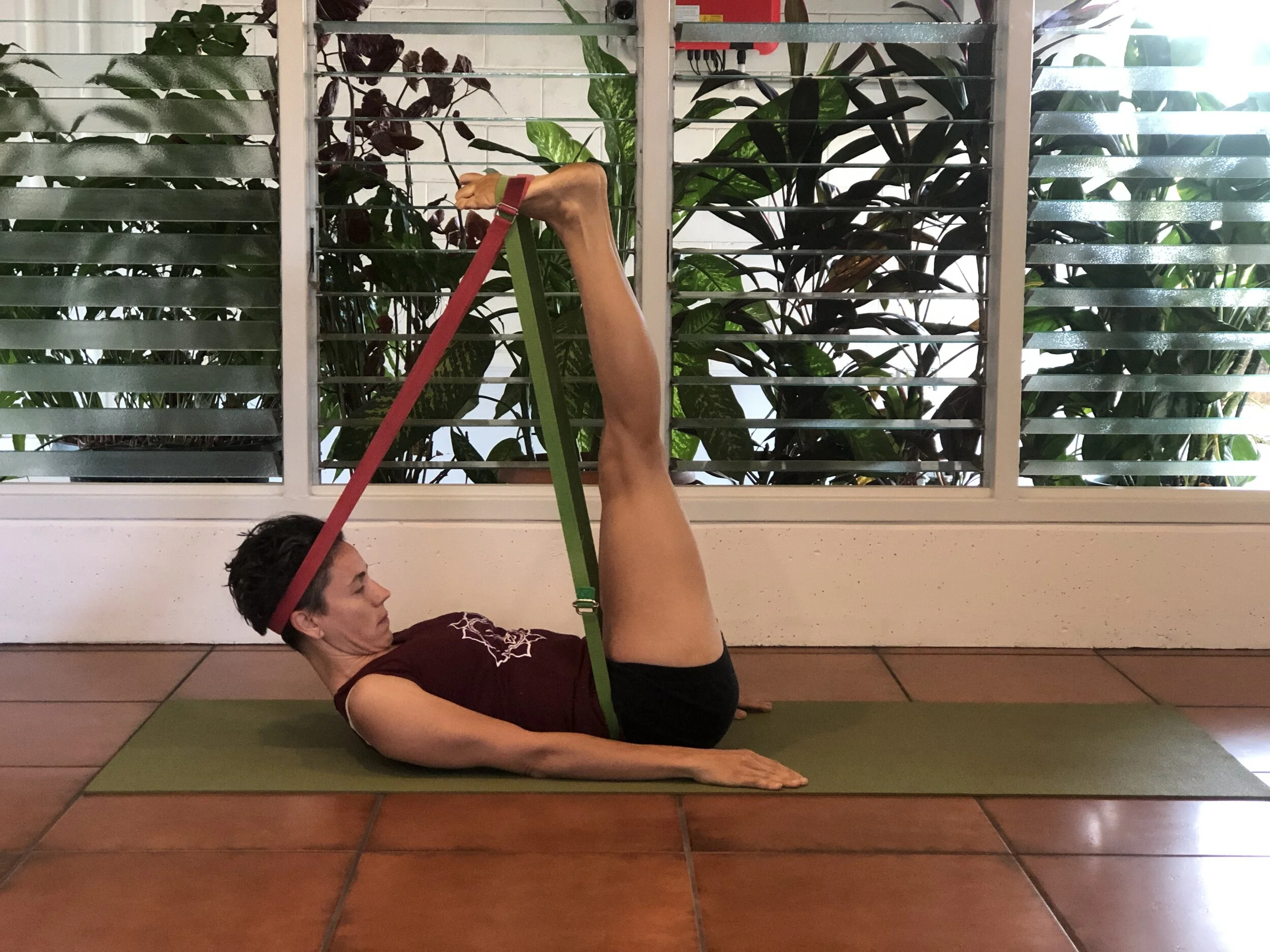
Avoid poses that push the abdominal forward, particularly avoid any poses. You need to practice poses that sit the abdomen back for example Adho Mukha Savansana in the ropes, supta padanguthasana and viparita karani just to name a few.

I hope this points you in the right direction.
If you would like to submit a question about home practice and receive the answer in these weekly Practice Points, you can below. Question related to specific injuries will not be answered.